
Account-Based Marketing as Revenue Architecture: From Campaign Tool to Growth Strategy
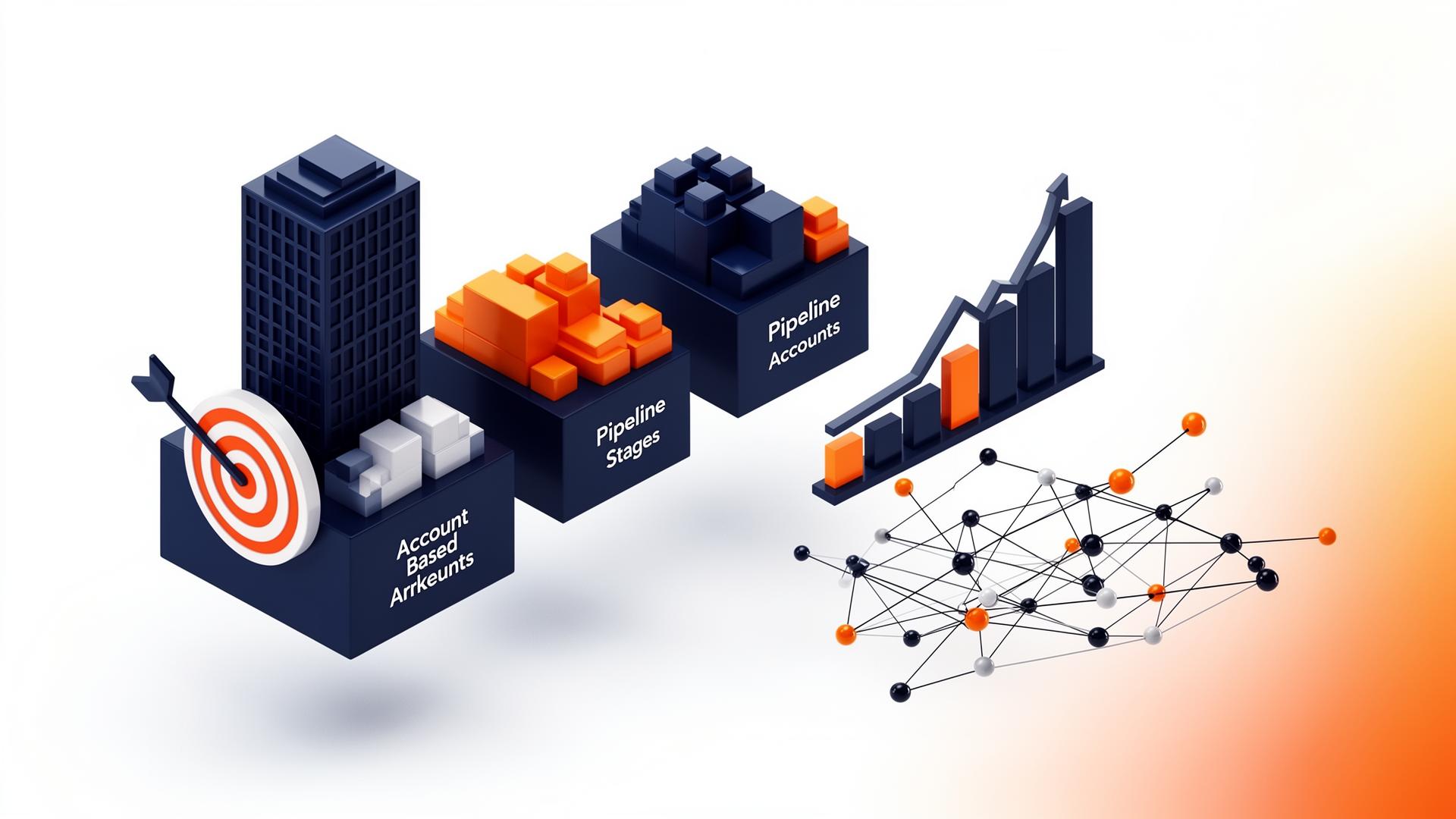
ABM is evolving from a marketing tactic into an enterprise-wide revenue architecture. Learn how integrating , sales alignment, and multi-channel orchestration transforms ABM into a strategic growth lever.
Why ABM Is More Than a Marketing Channel
Account-Based Marketing has evolved from a niche strategy for enterprise sales teams into the dominant B2B go-to-market methodology. Yet most organizations still deploy ABM as an isolated ,personalized ads for a handful of key accounts. That barely scratches the surface.
ABM as Revenue Architecture means: Marketing, Sales, and Customer Success work together on an orchestrated system that coordinates every of a target account,from the first intent signal to the upsell.
The Three Maturity Levels of ABM
| Maturity Level | Focus | Typical Tools | Revenue Impact |
|---|---|---|---|
| ABM 1.0 – Campaigns | Personalized ads for account lists | LinkedIn Ads, Demandbase | +15-25% response rate |
| ABM 2.0 – Programs | Multi-channel orchestration with sales alignment | 6sense, HubSpot ABM | +40-60% pipeline velocity |
| ABM 3.0 – Architecture | Enterprise-wide revenue orchestration | Intent + CRM + CDP + AI | +80-120% deal size |
The Four Pillars of ABM Revenue Architecture
1. Intent-Based Account Selection
Forget static account lists. Modern ABM architectures use to dynamically identify accounts actively searching for solutions:
- Surge Detection: Identifying accounts with sudden spikes in research activity
- Topic Cluster : Tracking which topics an account's buying committee is currently researching
- Competitive Intelligence: Detecting when accounts are evaluating competitors
> "The best ABM programs don't react to accounts,they anticipate needs before the first contact happens." – Forrest Research 2026
2. Buying Committee Mapping
An average B2B deal involves 11-14 decision-makers. ABM as revenue architecture means addressing each person in the buying committee individually:
Persona-Specific Streams:
- C-Level: ROI cases, market analyses, executive briefings
- VP/Director: Implementation roadmaps, benchmark data
- Manager/Practitioner: Technical deep-dives, use cases, demos
- Champion/Influencer: Thought leadership, community access
3. Multi-Channel Orchestration
ABM architecture orchestrates not just marketing channels but all revenue-relevant touchpoints:
Marketing Layer:
- Personalized website experiences (dynamic content)
- Account-specific ad campaigns (LinkedIn, display, programmatic)
- Custom content hubs for target accounts
- Event invitations and executive dinners
Sales Layer:
- Sequenced outreach cadences based on intent signals
- Personalized video messages
- Account-specific proposals and business cases
- Multi-threading into the buying committee
Success Layer:
- Onboarding journeys for new stakeholders
- Expansion signals from product usage data
- Cross-sell triggers based on account maturity levels
4. Revenue Attribution and Measurement
ABM programs need their own KPIs that go beyond classic marketing metrics:
| KPI | Description | Benchmark |
|---|---|---|
| Account Engagement Score | Aggregated interaction across all contacts | >70 for "Sales-Ready" |
| Pipeline Velocity | Time from first engagement to opportunity | 30-45% faster than inbound |
| Deal Size | Average contract value | 2-3× larger than non-ABM |
| Win Rate | Close rate for ABM accounts | 40-60% vs. 15-20% |
| Multi-Thread Rate | % deals with 3+ buying committee contacts | >65% |
Implementation Roadmap: From ABM 1.0 to 3.0
Phase 1: Foundation (Months 1-3)
- Define ICP and create target account list
- Integrate provider (6sense, Bombora, G2)
- Ensure CRM data quality
- Conduct sales-marketing alignment workshop
Phase 2: Orchestration (Months 4-6)
- Develop multi-channel playbooks for top-tier accounts
- Map buying committees for top 50 accounts
- Build personalized landing pages and hubs
- Train SDR/BDR team on ABM workflows
Phase 3: Scaling (Months 7-12)
- Implement AI-powered account prioritization
- Activate dynamic website
- Build revenue attribution dashboard
- Launch expansion ABM for existing customers
Phase 4: Revenue Architecture (Months 12+)
- Predictive models for deal probability
- Automated orchestration engines
- Integrate Customer Success into ABM framework
- Account-level P&L tracking
Case Study: From 800 to 50 Accounts,and 3× More Revenue
A mid-market SaaS company transformed its go-to-market approach with ABM as revenue architecture:
Before (-Gen Model):
- 800 accounts in pipeline
- 12% win rate
- Avg. €45,000 deal size
- 9-month sales cycle
After (ABM Revenue Architecture):
- 50 strategic target accounts
- 48% win rate
- Avg. €135,000 deal size
- 5.5-month sales cycle
The key: Stop generating more leads,start reaching the right accounts with the right messages at the right time.
ABM Technology Stack 2026
Modern ABM architecture requires an integrated tech stack:
- Intent Layer: 6sense, Bombora, G2 Buyer Intent
- Orchestration Layer: HubSpot, Marketo, Demandbase
- Layer: LinkedIn Sales Navigator, Outreach, Vidyard
- Data Layer: ZoomInfo, Clearbit, Cognism
- Layer: Dreamdata, Bizible, CaliberMind
- AI Layer: Predictive scoring, next-best-action, recommendations
Conclusion: ABM Is Not a Project,It's an Operating System
Thinking of Account-Based Marketing as revenue architecture means a fundamental shift: Away from -driven marketing, toward an integrated system that aligns Marketing, Sales, and Customer Success around shared revenue goals.
Organizations that make this shift don't just see better rates,they transform the dynamics of their entire go-to-market model.
Ready to implement ABM as revenue architecture? Davies Meyer supports you in developing a tailored ABM strategy,from account selection to revenue .
Loading related terms…
All TermsReady for your next project?
Let's discuss your marketing challenges and develop solutions together.
Get in touchKeep reading
Related posts
 StrategySeptember 13, 20269 min
Marketing strategy in 90 days: The decisions behind growth
Which decision will move growth forward? Six strategic questions connect customer understanding, creative ideas and investment, with a 90-day working plan.
Read article StrategySeptember 11, 20267 min
AI strategy: Think bigger, start with focus
What becomes possible when we combine AI with customer knowledge and clear quality criteria? A starting point from Patrick Collison, translated into practical decisions for digital services.
Read article StrategySeptember 11, 20267 min
Brand differentiation: Why customers choose you
A relevant advantage needs a recognisable brand and an easy path to use. How brand strategy, design and digital applications work together.
Read article
Bekomme solche Insights jede Woche.
Strategische Marketing-Insights für CMOs — kein Fluff, kein Spam.