
Agentic AI in Marketing: When AI Autonomously Runs Campaigns
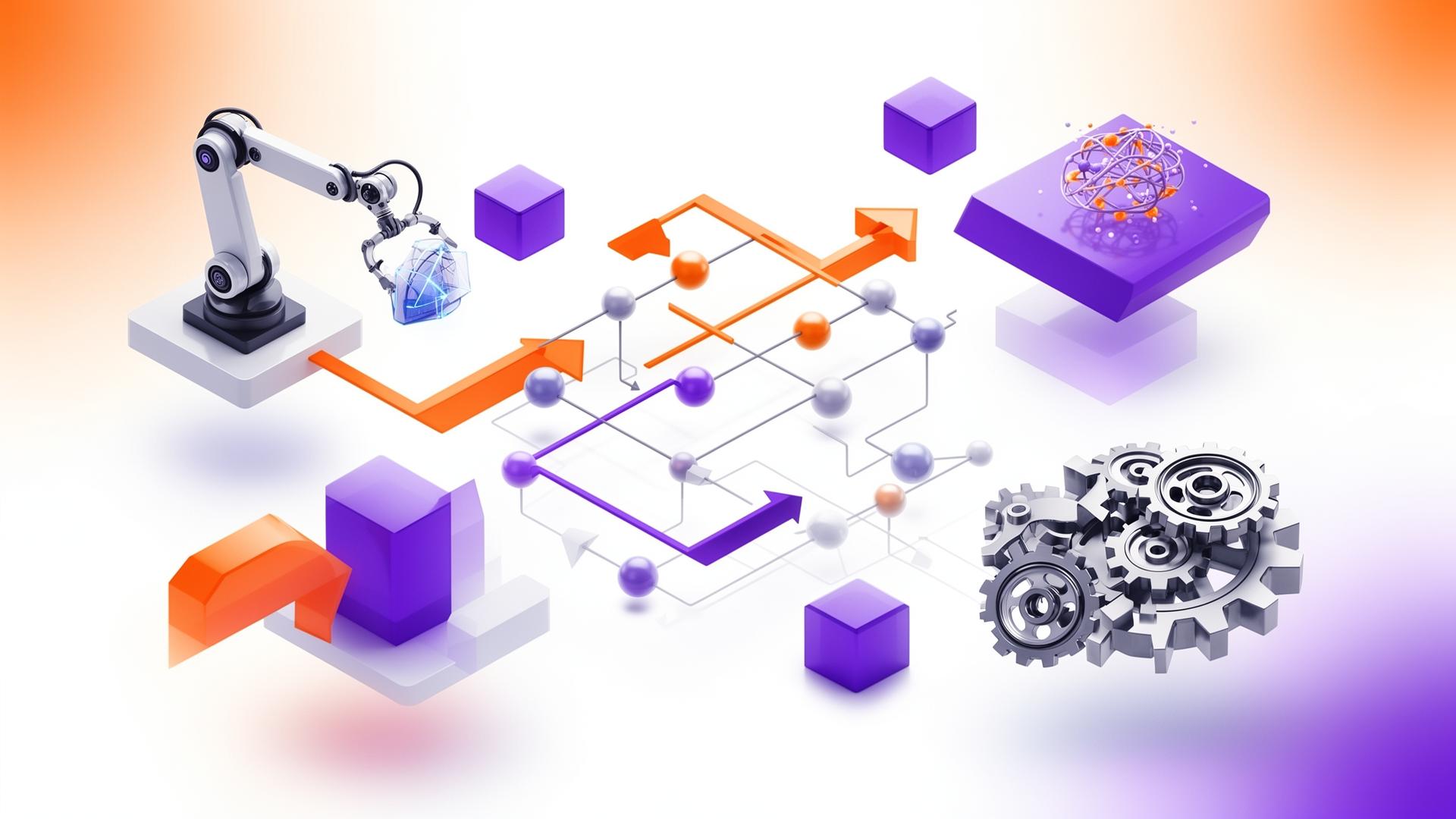
is fundamentally transforming marketing: Autonomous plan, optimize, and scale campaigns in real time – without human intervention at every step.
What Is Agentic AI – and Why Does It Change Everything?
Artificial intelligence has made a quantum leap in the past two years. But while most companies still use AI as a glorified text processing tool, a new category is emerging: – autonomous AI systems that independently pursue goals, make decisions, and execute complex workflows.
In marketing, this means: Instead of writing individual prompts, you define a goal – and the AI agent handles the rest. From analysis to creation to real-time optimization. This isn't science fiction. It's happening now.
According to Gartner, by 2028, over 33% of enterprise applications will integrate – compared to less than 1% in 2024. For marketing teams, this means a fundamental realignment.
Agentic AI vs. Traditional Automation: The Critical Difference
Rule-Based Automation (Yesterday)
Traditional works on the if-then principle: If a opens an email, then send follow-up B. It's efficient but rigid. Every rule must be manually defined, and the system can't react to unforeseen situations.
Generative AI (Today)
ChatGPT, Midjourney, and others can create , translate texts, and generate ideas. But they need a human prompt for every task. They act reactively, not proactively.
Agentic AI (Tomorrow – and Partly Already Today)
Agentic AI combines perception, planning, and action. A marketing agent can:
- Analyze data: Evaluate performance data in real time
- Make decisions: Redistribute budget across channels
- Create content: Generate ad copy and visuals
- Optimize: Run A/B tests and scale winners
- Learn: Derive patterns from results and adapt strategies
| Dimension | Rule-Based | Generative AI | Agentic AI |
|---|---|---|---|
| Autonomy | None | Low | High |
| Decision-making | Predefined | On request | Independent |
| Learning ability | None | Limited | Continuous |
| Complexity | Simple workflows | Single tasks | Multi-step processes |
| Human oversight | Low needed | Medium | Strategic |
5 Concrete Use Cases for Agentic AI in Marketing
1. Autonomous Campaign Optimization
Imagine your budget is no longer managed by a media buyer but by an AI agent all channels 24/7. It recognizes that Instagram Stories perform better on Tuesday evenings than Reels, shifts budget in real time, and adapts creatives.
Result: 20–35% higher ROAS at the same budget – without manual intervention.
2. Dynamic Content Production
A content agent analyzes trending topics, identifies gaps in your content calendar, and creates drafts including SEO optimization. It considers your , current performance data, and competitive analyses.
3. Personalized Customer Journeys
Instead of static funnels, an agent creates individual journeys for each user. Based on behavioral data, it decides in real time: Does this person get an email, a push notification, or a personalized landing page?
4. Predictive Lead Scoring
An agent analyzes hundreds of data points – website behavior, social media interactions, email engagement, company data – and calculates conversion probability in real time. Sales teams focus only on the most promising leads.
5. Cross-Channel Attribution
The agent connects touchpoints across all channels and creates a holistic picture of the customer journey. It recognizes that the blog article from three weeks ago was the actual conversion driver – not the last Google ad.
The Architecture of a Marketing Agent
Perception Layer
The agent continuously collects data from all connected systems: , CRM, social media, ad platforms, email tools. It recognizes patterns and anomalies in real time.
Reasoning Layer
Based on the data, the agent creates hypotheses: "The CTR of the Instagram has been declining for three days. Possible causes: creative fatigue, saturation, or seasonal effect."
Planning Layer
The agent develops an action plan: "Create new creative variants, expand audience, temporarily shift budget to TikTok."
Action Layer
The agent implements the plan – creating new ads, adjusting targeting, and redistributing budget. All within defined guardrails.
Learning Layer
After implementation, the agent analyzes results and stores insights. In the next similar scenario, it acts faster and more precisely.
Risks and Challenges
1. Loss of Control
When AI acts autonomously, who is responsible? Brands need clear governance structures and defined guardrails for .
2. Brand Safety
An agent that independently creates and publishes can violate . Solution: Multi-stage approval processes and automated brand checks.
3. Data Quality
Agentic AI is only as good as the data it's based on. Bad data leads to bad decisions – just faster.
4. Transparency
When an agent makes decisions, it must be traceable why. Black-box systems are not acceptable for regulated industries.
5. Skill Gap
Marketing teams need new competencies: Prompt engineering becomes agent engineering. Strategy becomes more important than execution.
Implementation Roadmap: Agentic AI in 4 Phases
Phase 1: Foundation (Months 1–3)
- Build and cleanse data infrastructure
- Audit existing automations
- Build team competencies (workshops, training)
- Prioritize use cases by impact and feasibility
Phase 2: Pilot (Months 4–6)
- Select one channel or workflow
- Implement with tight guardrails
- Human-in-the-loop for all decisions
- Define KPIs and measure baseline
Phase 3: Scale (Months 7–12)
- Expand successful pilots to additional channels
- Gradually loosen guardrails
- Implement multi-agent systems
- Establish governance framework
Phase 4: Optimize (Month 12+)
- Agents continuously learn from results
- Cross-channel orchestration
- Strategic role for humans, operational for agents
- Regular audits and adjustments
Our Recommendation
isn't hype – it's the next evolutionary stage in marketing. But success doesn't depend on the technology but on the strategy behind it.
At Davies Meyer, we guide companies on the path to agent-powered marketing. From strategy development through implementation to continuous optimization.
Our approach:
1. Audit: Where does your marketing stack stand today?
2. Strategy: Which processes are suitable for ?
3. Implementation: Pilot projects with measurable results
4. Scaling: From one agent to an agent ecosystem
5. Governance: Clear rules for autonomous systems
Conclusion: The Future Belongs to Agents
won't replace all marketers. But marketers who use Agentic AI will replace those who don't. The question isn't whether but when – and those who want to must start now.
The smartest brands no longer build campaigns. They build systems that build campaigns.
Loading related terms…
All TermsReady for your next project?
Let's discuss your marketing challenges and develop solutions together.
Get in touchKeep reading
Related posts
 AI & AutomationOctober 17, 202614 min
AP2: Approvals, payment and customer experience for brands
Agents can assist with shopping. AP2 structures payment authorisation; responsibility, service and commercial value remain separate tasks.
Read article AI & AutomationOctober 17, 202613 min
AI marking: What marketing production must check under Article 50
An AI badge does not resolve every transparency question. What matters is the role, content and evidence in the version actually published.
Read article AI & AutomationJanuary 26, 202614 min
Synthetic Media: How AI-Generated Content Is Transforming Marketing
From AI-generated videos and digital avatars to personalized commercials, Synthetic Media is revolutionizing content production in marketing.
Read article
Bekomme solche Insights jede Woche.
Strategische Marketing-Insights für CMOs — kein Fluff, kein Spam.