
Creator Economy 3.0: From Influencers to Creator Entrepreneurs
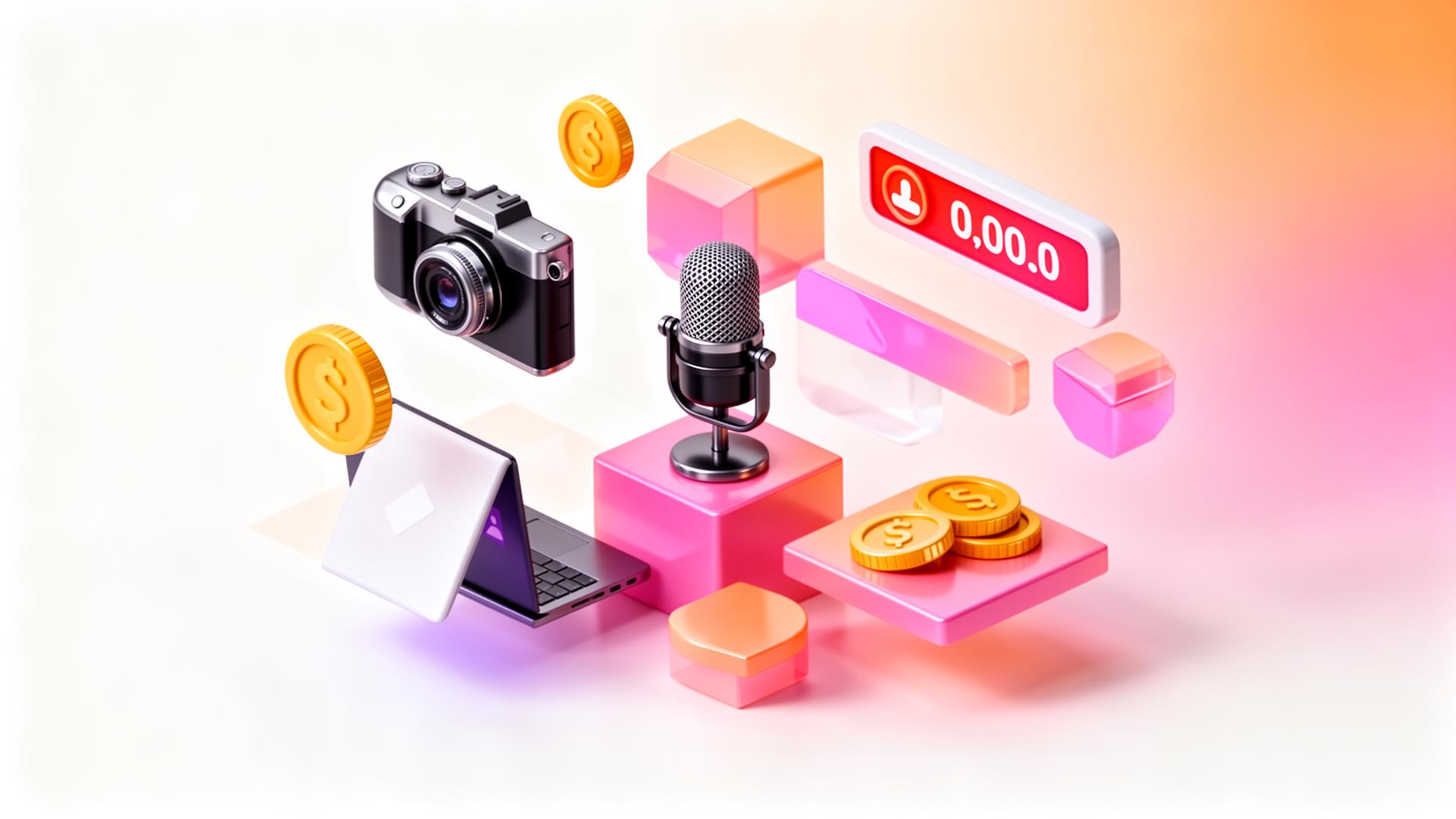
The has fundamentally changed: Own products, own platforms, own brands. What this means for brand collaborations.
The Evolution of the Creator Economy
1.0: Bloggers and YouTubers living off AdSense and sponsorships
2.0: Influencers with millions of followers doing brand deals
3.0: Creators becoming entrepreneurs with their own products, brands, and platforms
The transformation is fundamental: Creators are no longer just advertising vehicles – they're competitors.
What Defines Creator Economy 3.0
Own Products Instead of Sponsorships
The most successful creators in 2026 earn the majority of their revenue not from brand deals, but from their own products:
- MrBeast → Feastables (snack brand, $500M+ revenue)
- Emma Chamberlain → Chamberlain Coffee (premium coffee)
- MKBHD → Panels (wallpaper app, millions of downloads)
- Ali Abdaal → Skillshare course (multi-million dollar business)
Own Platforms
Creators no longer want to depend on algorithms:
- Newsletters (Substack, Beehiiv) for direct relationships
- Membership platforms (Patreon, Memberful) for recurring revenue
- Own apps and communities
- Podcasts as channels
From Personal Brand to Business Brand
The trend shifts from "I recommend products" to "I build products." Creators use their not as an advertising channel, but as a launch platform.
What This Means for Brands
Power Dynamics Are Shifting
- Creators negotiate as equals – or decline deals
- Authenticity is non-negotiable: Only products they actually use
- Long-term partnerships instead of one-shot campaigns
- Revenue shares instead of flat fees
New Collaboration Models
| Model | Description | Advantage |
|---|---|---|
| Co-Creation | Joint product development | Authenticity + Expertise |
| Equity Deals | Ownership instead of payment | Long-term commitment |
| White Label | Creator product with brand backing | Scale + Credibility |
| Affiliate Pro | Performance-based compensation | ROI-safe |
| Creative Partnership | Creator as creative director | Fresh perspective |
Finding the Right Creators
It's not about follower counts, but:
- : How active is the ?
- fit: Does the target audience match the brand?
- Authenticity: Would the creator use the product without a deal?
- Business mindset: Does the creator think entrepreneurially?
- Content quality: Is the content at the brand's level?
The Micro-Creator Revolution
While mega-influencers become entrepreneurs, micro-creators (1,000-50,000 followers) are growing into the most important group for brand collaborations:
Advantages of Micro-Creators
- Higher rates (5-8% vs. 1-2% for mega-influencers)
- Niche expertise: Deep knowledge in specific areas
- Cost efficiency: More per budget
- Authenticity: Less "salesy," more -oriented
- Scalability: 20 micro-creators instead of 1 mega-influencer
Creator Commerce: The New Value Chain
From Awareness to Revenue
1. → : Creator builds
2. Audience → Trust: Engagement and loyalty
3. Trust → Product: Own products or co-creations
4. Product → Revenue: Direct sales instead of just reach
Tools of Creator Economy 3.0
- Shopify for creator commerce
- Kajabi for digital products and courses
- Beehiiv for newsletter monetization
- Stan Store for link-in-bio commerce
- Fourthwall for merch and membership
Our Recommendation for Brands
1. Think partnerships, not bookings – Creators are business partners
2. Offer real value – Not just money, but resources and expertise
3. Invest long-term – The best results come over months, not weeks
4. Test micro-creators – Often better ROI than mega-deals
5. Be open to co-creation – The best products are built together
Conclusion
3.0 has changed the rules. Creators are no longer just advertising vehicles – they're entrepreneurs, product developers, and media companies in one person.
Brands that understand this win the best partners. Those that don't lose them to the competition – or to the creators themselves.
Loading related terms…
All TermsReady for your next project?
Let's discuss your marketing challenges and develop solutions together.
Get in touchKeep reading
Related posts
 Digital TrendsSeptember 13, 20266 min
Payload & MCP: From product knowledge to reviewed content
The product knowledge exists, but publishing the next page still takes many manual steps. A practical example shows how a CMS, AI and editors can work together.
Read article Digital TrendsJuly 27, 20269 min
Agentic Commerce: What Happens When Agents Buy Instead of People
Checkout is moving into the chat. ChatGPT, Gemini and Copilot compare, decide and buy on behalf of your customers. Here is what that means for product data, feeds, trust signals and your conversion logic.
Read article Digital TrendsJuly 26, 20268 min
Google AI Max and the New Search Monetisation: What Billions of New Queries Mean for Your Paid Search Budget
AI surfaces generate longer, more specific queries — and with them inventory that did not exist before. How to align campaign structure, keyword logic and budget planning.
Read article
Bekomme solche Insights jede Woche.
Strategische Marketing-Insights für CMOs — kein Fluff, kein Spam.