
Multi-Channel Buyer Journeys: How to Orchestrate the Non-Linear Buying Journey
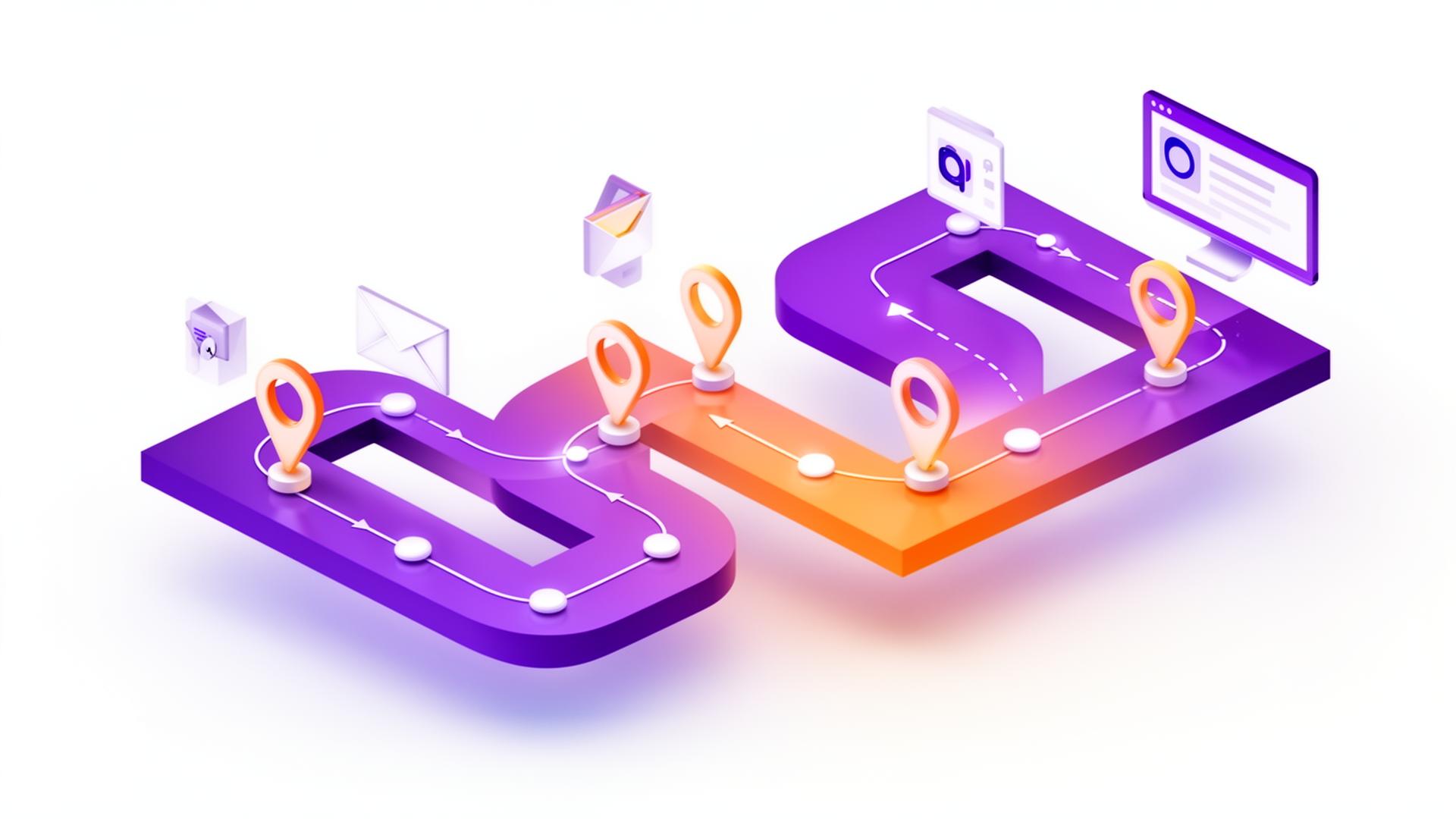
The B2B buying journey is no longer linear. Modern buyer journeys span 20-30 touchpoints across 6-10 channels. Learn how to master this complexity with signal-based orchestration.
The Illusion of the Linear Funnel
The classic ,Awareness → Consideration → Decision,is an oversimplified model that no longer reflects the reality of modern B2B buying decisions. The truth is messier: Buyers jump between channels, revisit phases, pause, and restart.
Current numbers:
- Average of 27 touchpoints before a B2B purchase decision
- 6-10 different channels are used
- 70-80% of the journey happens without direct vendor contact
- 11-14 stakeholders are involved in the decision process
The Non-Linear Buyer Journey
Instead of a , the modern buyer journey resembles a network:
| Phase | Behavior | Channels | Visibility |
|---|---|---|---|
| Problem Awareness | Research, peer consultation | Google, LinkedIn, communities | 20% visible |
| Solution Exploration | Vendor comparison, consumption | Blog, podcast, review sites | 40% visible |
| Requirements Building | Internal alignment, specification | Email, meetings, documents | 10% visible |
| Vendor Evaluation | Demos, trials, references | Website, sales, events | 80% visible |
| Consensus Building | Buying committee alignment | Internal comms, meetings | 5% visible |
| Decision & Purchase | Contract negotiation, procurement | Direct sales, legal | 90% visible |
The Channel Matrix: Where Your Buyers Actually Are
Digital Channels
Owned Channels:
- Website & Blog: hub and point
- Email: Nurture sequences and trigger-based communication
- App/Product: Product-led growth and in-app messaging
- Newsletter: Thought leadership and brand building
Earned Channels:
- Organic Search: SEO-optimized for all funnel phases
- Social Organic: LinkedIn thought leadership and community engagement
- PR & Earned Media: Industry coverage and expert quotes
- Reviews & Ratings: G2, Capterra, Trustpilot
Paid Channels:
- LinkedIn Ads: Account-based targeting and lead gen forms
- Google Ads: Intent-based search and display
- Programmatic: Retargeting and account-based advertising
- Content Syndication: Amplification of gated content
Offline & Hybrid Channels
- Events & Conferences: Networking and demo opportunities
- Webinars & Workshops: Education and lead capture
- Executive Dinners: High-touch for enterprise deals
- Direct Mail: Personalized physical touchpoints
Signal-Based Orchestration
The Signal Framework
Instead of rigid workflows, signal-based orchestration responds to real-time behavioral signals:
Intent Signals (external sources):
- Keyword research on relevant topics
- Competitor website visits
- Technology evaluations
- Job postings for relevant roles
Signals (owned channels):
- Website visit frequency and depth
- download patterns
- Email engagement trends
- Social media interactions
Buying Signals (direct indicators):
- Pricing page visited
- Demo requested
- Case studies read multiple times
- Multiple stakeholders from the same account active
Signal-to-Action Mapping
| Signal | Score | Action | Channel |
|---|---|---|---|
| Pricing page visited | +30 | Sales alert + personalized follow-up | Email, LinkedIn |
| 3+ content downloads/week | +20 | Add to ABM program | Multi-channel |
| Competitor keyword surge | +25 | Send competitive battlecard | Email, retargeting |
| Webinar attended | +15 | Personalized follow-up with next steps | Email, LinkedIn |
| Demo requested | +50 | Immediate sales contact | Phone, email |
| Multiple stakeholders active | +35 | Mark account as "sales-ready" | Direct sales |
Journey Orchestration in Practice
Cross-Channel Sequencing
An example of an orchestrated multi-channel sequence:
Day 1: Buyer reads blog article about Problem X (organic)
Day 3: ad with related whitepaper (paid)
Day 5: Buyer downloads whitepaper (owned)
Day 7: Personalized email with (email)
Day 10: LinkedIn connection request from SDR (social)
Day 12: Buyer visits pricing page (owned) → sales alert
Day 14: Personal call referencing journey (phone)
Day 21: Demo with tailored agenda (sales)
Channel Synergy Framework
The art lies in synergy between channels:
Amplification: One channel amplifies another's impact
- Blog article → Social amplification → Retargeting → Email nurture
Sequencing: Channels build on each other
- Event → Follow-up email → Personalized LinkedIn message → Demo
Reinforcement: Consistent messaging across all channels
- Same value proposition in different formats and contexts
Escalation: Channel switches with rising engagement
- Digital → Hybrid → Personal → High-touch
Attribution in Multi-Channel Journeys
Multi-Touch Attribution Models
| Model | Description | Best For |
|---|---|---|
| Linear | Equal weight for all touchpoints | Overall journey overview |
| Time Decay | Later touchpoints weighted more | Bottom- optimization |
| Position-Based | First + last touch weighted more | Acquisition + |
| Data-Driven | ML-based weighting | Precise channel optimization |
| Incrementality | Causal-based measurement | True channel effectiveness |
Accounting for the Dark Funnel
50-70% of the buyer journey happens in the "dark funnel",invisible to :
- Peer recommendations: Slack channels, WhatsApp groups, dinner conversations
- Organic social: Reading LinkedIn posts without interacting
- Community: Forums, Discord servers, Reddit threads
- Word-of-mouth: Conference conversations, team meetings
Measuring the Dark Funnel:
- Self-reported attribution: "How did you hear about us?" at demo requests
- Branded search uplift: Increase in brand searches after campaigns
- Direct traffic analysis: Patterns in direct website traffic
Technology Stack for Journey Orchestration
| Layer | Tools | Function |
|---|---|---|
| Data | CDP (Segment, mParticle) | Unified customer profiles |
| Intent | 6sense, Bombora, G2 | External intent signals |
| Orchestration | HubSpot, Marketo, Journey.io | Cross-channel workflows |
| Mutiny, Clearbit Reveal | Dynamic website | |
| Outreach, LinkedIn SN, Vidyard | Sales-layer execution | |
| Analytics | Dreamdata, HockeyStack | Multi-touch attribution |
| AI | Predictive scoring, NBA | Next-best-action engine |
Implementation Roadmap
Phase 1: Foundation (Months 1-3)
- mapping for top 3 ICPs
- Signal inventory: Which signals are you already capturing?
- Tech stack audit: Which tools are connected, which isolated?
- Establish baseline
Phase 2: Quick Wins (Months 4-6)
- Connect top 5 signals with automated actions
- Build cross-channel sequences for high-intent accounts
- Implement self-reported
- Define sales-marketing signal handoff
Phase 3: Optimization (Months 7-12)
- Implement data-driven attribution
- Build dark funnel measurement
- Conduct channel synergy analyses
- Segment journey orchestration for mid-market and enterprise
Phase 4: Mastery (Month 12+)
- AI-powered next-best-action engine
- Predictive journey mapping
- Real-time journey personalization
- Continuous optimization loop
KPIs for Multi-Channel Journey Orchestration
| KPI | Description | Target |
|---|---|---|
| Journey Velocity | Average duration from first touch to close | <90 days |
| Channel Coverage | Number of active channels per account | 4-6 channels |
| Signal Response Time | Time from signal to action | <2 hours (sales-ready) |
| Cross-Channel | % conversions with 3+ channel touchpoints | >60% |
| Accuracy | % of journey with known touchpoints | >50% |
| Pipeline per Channel | Pipeline contribution per channel | Balanced portfolio |
Conclusion: The Future Belongs to Orchestration, Not Automation
Orchestrating means more than . It's about building an intelligent system that interprets signals in real-time and delivers the right message through the right channel at the right time.
Organizations that master this orchestration shorten their sales cycles, increase their win rates, and create a seamless buying experience that sets them apart from the competition.
Want to orchestrate your buyer journey instead of just automating it? Davies Meyer develops a cross-channel orchestration strategy with you that accelerates your pipeline.
Loading related terms…
All TermsReady for your next project?
Let's discuss your marketing challenges and develop solutions together.
Get in touchKeep reading
Related posts
 StrategySeptember 13, 20269 min
Marketing strategy in 90 days: The decisions behind growth
Which decision will move growth forward? Six strategic questions connect customer understanding, creative ideas and investment, with a 90-day working plan.
Read article StrategySeptember 11, 20267 min
AI strategy: Think bigger, start with focus
What becomes possible when we combine AI with customer knowledge and clear quality criteria? A starting point from Patrick Collison, translated into practical decisions for digital services.
Read article StrategySeptember 11, 20267 min
Brand differentiation: Why customers choose you
A relevant advantage needs a recognisable brand and an easy path to use. How brand strategy, design and digital applications work together.
Read article
Bekomme solche Insights jede Woche.
Strategische Marketing-Insights für CMOs — kein Fluff, kein Spam.