
Privacy-First Lead Generation: How to Win High-Quality Leads Without Third-Party Cookies
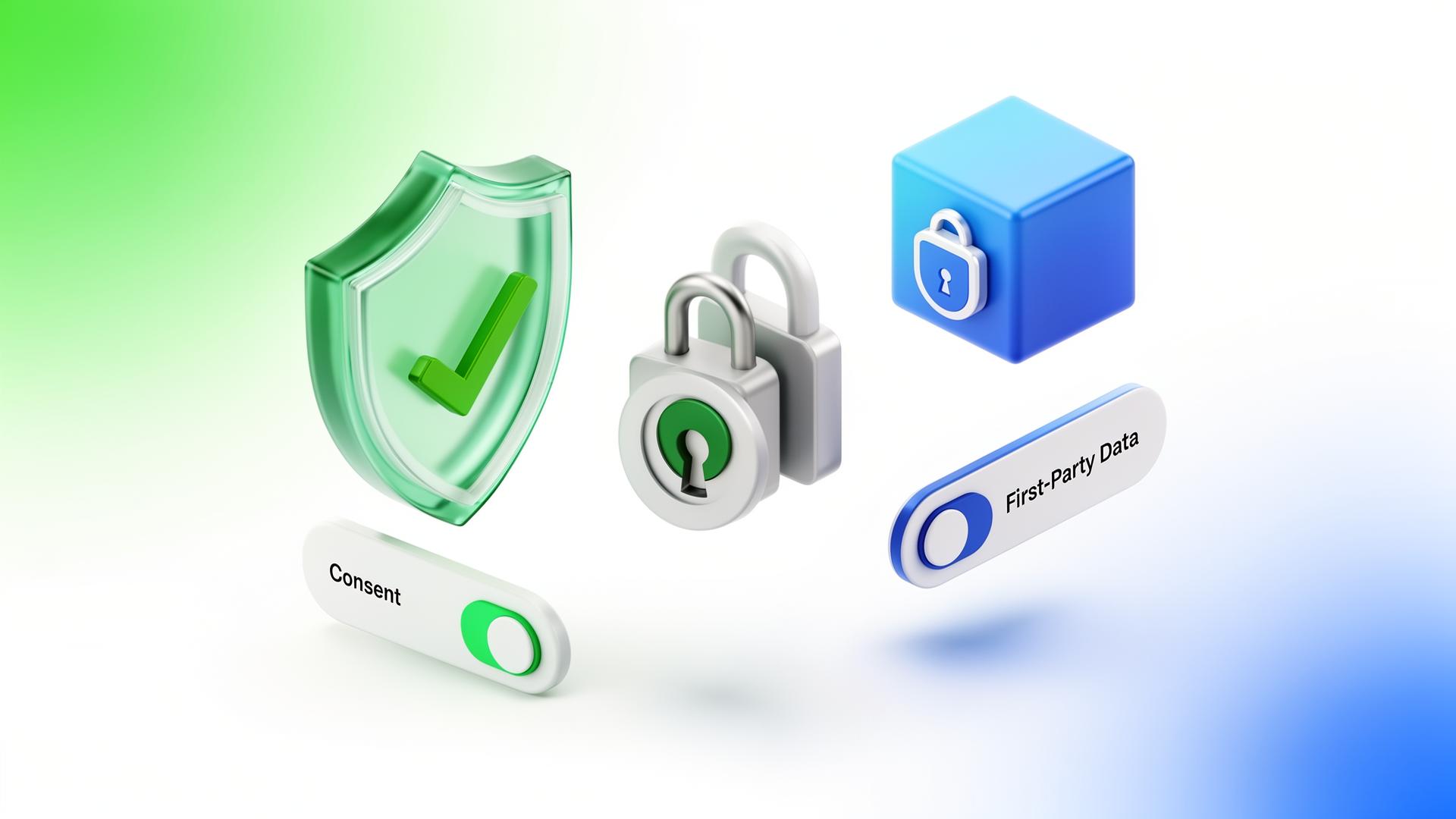
The end of third-party cookies forces marketing teams to rethink. uses , consent-based strategies, and contextual signals for better leads with full GDPR compliance.
The Post-Cookie Era Is Here
Google has finally deprecated third-party cookies in Chrome. Safari and Firefox did it years ago. For marketing teams, this means: The infrastructure that 70% of all digital strategies were built on no longer exists.
But this isn't a crisis,it's an opportunity. delivers not just GDPR-compliant leads but demonstrably higher quality ones. The reason: Those who voluntarily share data have genuine interest.
The Data Hierarchy in the Post-Cookie Era
| Data Type | Definition | Quality | Availability |
|---|---|---|---|
| Consciously shared by user (preferences, feedback) | Highest | Growing | |
| First-Party Data | Collected from owned channels (website, app, CRM) | High | Stable |
| Second-Party Data | Partner data (data clean rooms) | Medium-High | Limited |
| Third-Party Data | Aggregated by third parties (cookies, data brokers) | Low | Declining |
Zero-Party Data: The New Goldmine
is information that users voluntarily and proactively share with a brand. Unlike first-party data (observed behavior), these are explicitly stated preferences.
Strategies for Zero-Party Data Collection
1. Interactive
- Quizzes and assessments: "What marketing type are you?"
- ROI calculators: Individualized calculations in exchange for data
- Preference centers: Users actively choose their interests
- Product configurators: Customizations reveal needs
2. Value Exchange Models
- Exclusive in exchange for profile data
- Early access to new features
- Personalized recommendations for preferences
- Community access for professional details
3. Progressive Profiling
Instead of asking for all data at once, collect it over time:
- Touchpoint 1: Email address (newsletter signup)
- Touchpoint 2: Industry and role (content download)
- Touchpoint 3: Company size and budget (webinar registration)
- Touchpoint 4: Specific challenges (assessment)
> "The irony of the privacy-first approach: When you collect less data, you get better data." – Harvard Business Review
Maximizing First-Party Data
Server-Side Tracking
With the end of client-side cookies, server-side tracking becomes essential:
- Server-Side Tag Manager: GTM Server Container or similar solutions
- First-Party Domains: Tracking via own subdomains instead of third-party pixels
- Event-Based Tracking: API (CAPI) instead of browser cookies
- : Google's -compatible tracking
Owned Channels as Data Foundation
| Channel | Data Potential | Implementation |
|---|---|---|
| Website | Page views, click paths, engagement | Server-side analytics |
| Opens, clicks, preferences | ESP integration | |
| App | Feature usage, session data | Mobile analytics SDK |
| Chatbot | Questions, interests, pain points | Conversation analytics |
| Events | Attendance, engagement, networking | Event platform data |
Contextual Targeting: The Privacy-Friendly Alternative
Contextual targeting is experiencing a renaissance,smarter than ever:
Modern Contextual Intelligence
- Semantic Analysis: AI understands page context, not just keywords
- Sentiment Targeting: Advertising in matching emotional environments
- Topic Clustering: Thematic classification beyond individual pages
- Predictive Context: Predicting intent from context
Contextual vs. Behavioral Targeting
| Dimension | Contextual | Behavioral (Cookie-based) |
|---|---|---|
| Privacy | GDPR-compliant by default | Consent required |
| Accuracy | High (semantic) | Declining ( loss) |
| Brand Safety | Controllable | Hard to manage |
| Unlimited | Only with consent | |
| Cost | Rising | Declining (less data) |
Consent-Based Lead Strategies
The Consent-First Framework
Level 1: Transparency
- Clear, understandable privacy policies
- Visual representation of data usage
- Real-time feedback: "We use this data for X"
Level 2: Control
- Granular consent options (not just yes/no)
- Revocable at any time with one click
- Preference center with full control
Level 3: Value Exchange
- Clearly communicate benefits for data sharing
- Personalized experiences in return
- Exclusive or features for consent providers
Consent Rate Optimization
| Measure | Impact on Consent Rate | Effort |
|---|---|---|
| Understandable language | +15-25% | Low |
| Value proposition in banner | +20-35% | Low |
| Design optimization | +10-20% | Medium |
| Progressive consent | +25-40% | Medium |
| the CMP | +10-15% | Low |
Data Clean Rooms: Leveraging Second-Party Data
enable analysis of shared data without raw data exchange:
- Data Hub: Analysis of data in protected environment
- Amazon Marketing Cloud: Combining Amazon with own first-party data
- Publisher Clean Rooms: Direct cooperation with premium publishers
- Industry Clean Rooms: Industry-specific data cooperations
Use Cases for Data Clean Rooms
1. Audience Overlap Analysis: Which of your customers are also partner customers?
2. Attribution Enhancement: Supplementing own attribution with partner data
3. Lookalike Enrichment: Better lookalike models through expanded data basis
4. Measurement: Cross-publisher frequency capping and reach analysis
Implementation Roadmap
Phase 1: Audit & Quick Wins (Weeks 1-4)
- dependency audit: Which processes break without cookies?
- Consent rate analysis and optimization
- Integrate progressive profiling into existing forms
- Evaluate server-side tracking
Phase 2: Infrastructure (Weeks 5-12)
- Implement server-side tag manager
- Activate APIs (Meta CAPI, Google )
- Build first-party data strategy
- CMP optimization and A/B testing
Phase 3: Zero-Party Data (Weeks 13-20)
- Develop interactive content (quizzes, assessments)
- Build preference center
- Implement value exchange models
- Design progressive profiling flows
Phase 4: Advanced (Weeks 21+)
- Build data clean room partnerships
- Integrate contextual intelligence
- Switch predictive lead scoring to first-party data
- Test and integrate Privacy Sandbox APIs
KPIs for Privacy-First Lead Generation
| KPI | Description | Target |
|---|---|---|
| Consent Rate | % of visitors with full consent | >55% |
| Coverage | % of leads with voluntary profile data | >40% |
| Quality Score | Quality based on + intent | +30% vs. cookie-based |
| MQL-to-SQL Conversion | Marketing to sales lead conversion | >25% |
| Data Freshness | Currency of first-party data | <30 days |
| CAC (Privacy-First) | Customer acquisition cost without third-party targeting | ±10% vs. cookie-based |
Conclusion: Privacy Isn't an Obstacle,It's a Competitive Advantage
Organizations that implement early gain a strategic advantage: They build trust, collect higher-quality data, and are regulatory future-proof. While competitors mourn third-party cookies, privacy-first companies are building the machine of the future.
Want to switch your to privacy-first? Davies Meyer supports you in developing a privacy-compliant strategy that delivers better leads with full compliance.
Loading related terms…
All TermsReady for your next project?
Let's discuss your marketing challenges and develop solutions together.
Get in touchKeep reading
Related posts
 StrategySeptember 13, 20269 min
Marketing strategy in 90 days: The decisions behind growth
Which decision will move growth forward? Six strategic questions connect customer understanding, creative ideas and investment, with a 90-day working plan.
Read article StrategySeptember 11, 20267 min
AI strategy: Think bigger, start with focus
What becomes possible when we combine AI with customer knowledge and clear quality criteria? A starting point from Patrick Collison, translated into practical decisions for digital services.
Read article StrategySeptember 11, 20267 min
Brand differentiation: Why customers choose you
A relevant advantage needs a recognisable brand and an easy path to use. How brand strategy, design and digital applications work together.
Read article
Bekomme solche Insights jede Woche.
Strategische Marketing-Insights für CMOs — kein Fluff, kein Spam.