
TikTok Out of Phone: Social content on public screens

Plan creator for physical screens with confirmed inventory, creative adaptation, usage rights and an honest approach to measuring impact.
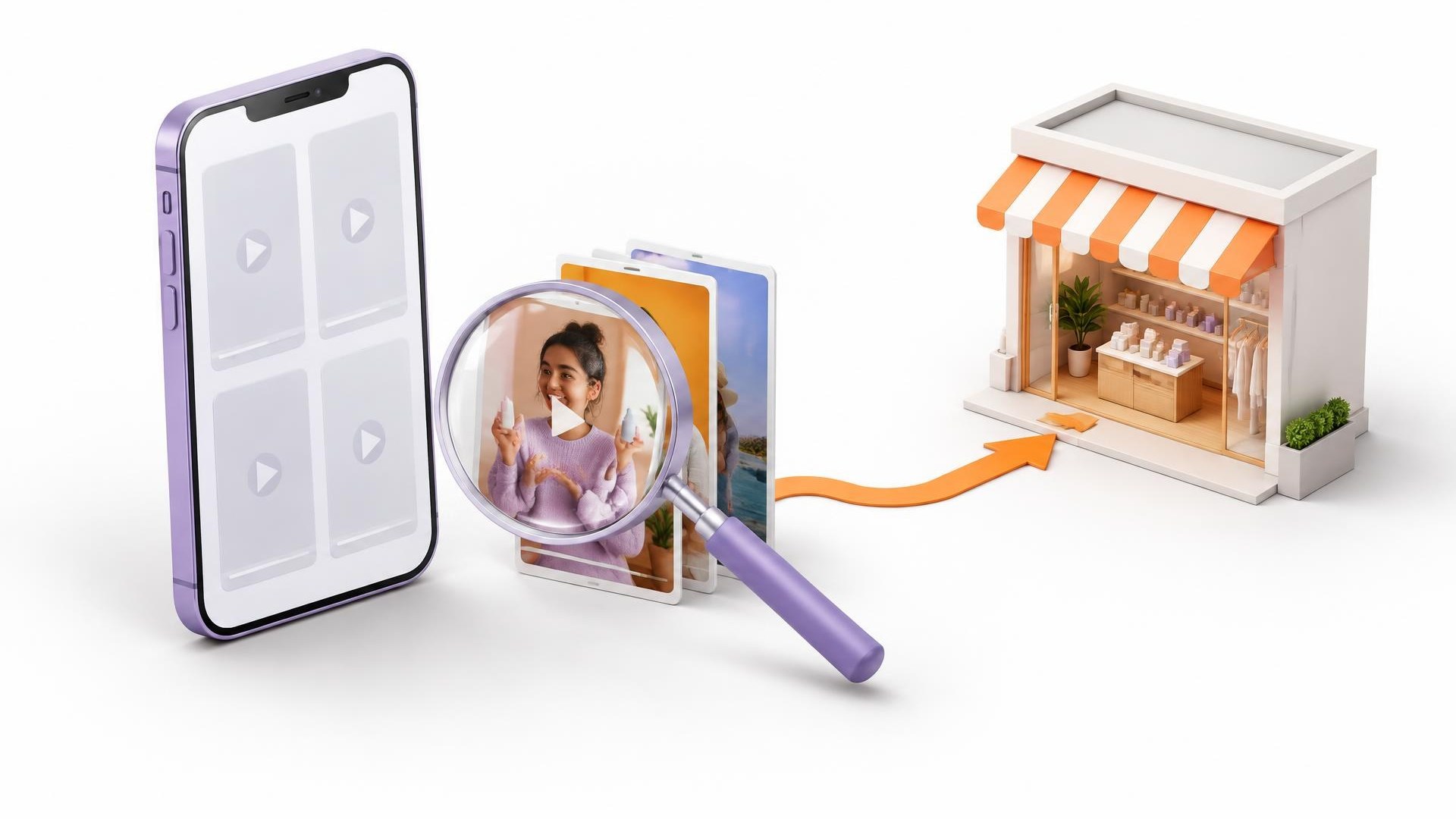
From a personal feed to a different viewing situation
A creator video can work on a phone and remain confusing on a public screen. Audio may be unavailable, exposure brief and the viewer unfamiliar with the creator or trend. Moving social onto physical screens changes more than format and scale. The communication task needs review for its new context.
On 3 September 2026, TikTok announced a European expansion of its Out of Phone programme. Six partners would bring organic creator to physical screens. The announcement names the UK, France, Belgium, Spain and Italy, and settings including wellness centres, malls, outdoor TV screens, bars, supermarkets and universities. Advertising options include content sponsorship and an extension onto digital outdoor screens.
This gives marketing leaders a concrete reason to connect social, and media planning. It is not evidence of German availability, a specific screen count or additional sales. This article is dated 4 November 2026 and distinguishes official facts from the questions responsible planning must answer next.
What the expansion actually establishes
TikTok names Alight Media, DooH it, Powerpill, Zoom Media, Next-Gen Media and C-Screens as partners. The five countries are the scope of this expansion announcement, not every European market. Germany is not included. Nor does the list establish that every partner serves every country or offers every named setting.
A programme announcement is not a binding media proposal. It does not specify availability in a city, dates, delivery conditions, screen inventory or independently verified . A therefore needs confirmation from the responsible provider. A reach forecast derived only from the announcement would be unsupported.
TikTok Out of Phone describes a connection between platform and physical media. It does not replace procurement of actual inventory. Planning needs to establish which content runs in which advertising form, on which screens, with which rights and delivery evidence.
- Confirm the market: Do not infer a particular country from a European headline.
- Specify inventory: Record the partner, setting and screen type in the offer.
- Check timing: Verify bookability and delivery separately.
- Review the service: Do not equate sponsorship and advertising extension without checking.
Social Ads and DOOH remain different media
In a personal feed, someone can pause, replay, comment or click. Those actions are not inherent to a public screen. A person may walk past, focus on another task or see only part of a sequence. A logged play therefore does not automatically establish perception.
Digital outdoor advertising and Social Ads can share a creative idea while retaining different contact and measurement logic. Likes, views and comments on an original post cannot be reused as evidence of physical-screen impact. A strong clip provides a possible creative starting point, not proof of attention in its new location.
Calls to action change too. A can offer a transition where distance, time and context make scanning practical. The same prompt may be unsuitable for a briefly visible screen. A profile name may encourage later search without producing a traceable visit. Choose the next step for the actual setting, not a blanket expectation.
Keep social and DOOH separate in budget reporting. Shared creative does not mean identical audiences. The same person may be counted in several sources across channels. Without appropriate, permitted deduplication, those figures cannot be added as unique-person .
The message needs to work without its opening scene
A feed video often develops a story across several shots. Someone viewing a public screen may join halfway through. Decide which information must remain understandable throughout. Product, brand and occasion need a clear hierarchy, without requiring every scene to repeat all details.
This does not mean flattening creator into generic advertising. A creator’s perspective and voice can remain. But a joke depending on trend audio or an earlier comment requires a deliberate decision. Assess whether it works in the new environment or whether another sequence communicates the idea more effectively.
Creative approval should consider actual viewing conditions. Small captions, rapid cuts and edge-positioned copy may work on a phone but fail at a distance. Review the final version at plausible scale. General recommendations still do not replace the technical specifications of the booked screen.
- One central message: Make the subject clear without feed context.
- Sound-independent : Essential meaning should not depend solely on audio.
- Readable information: Brand, offer and necessary conditions should be visible in context.
- Resilient entry: Do not assume every viewer sees the first second.
Technical and creative adaptation are separate tasks
A file may play correctly while communicating poorly. Confirm resolution, aspect ratio, frame rate, duration and audio rules with the provider. Then review framing, visual hierarchy and information density. Both belong in approval, but technical compliance alone does not establish creative suitability.
A vertical video adapted to another ratio may lose important elements. A surrounding frame may prevent cropping but reduce the visible size of the . Resetting captions can improve clarity while creating a new version requiring approval. Decide against the confirmed offer rather than an imagined standard screen.
Use a lean version matrix containing only what booked formats and countries need: original, sound-independent edit, local language or alternative composition. Unnecessary versions add cost and approval risk. Missing versions can force unsuitable delivery.
Record the file, version, purpose and approval status together. Media, production, creators and partners should not consider different files final. Traceability also helps later correction: which version ran when, where and under which rights? Organisational clarity is part of quality, not merely administration.
Public visibility does not grant unrestricted usage
Organic publication does not establish rights for additional advertising media. Outdoor use may require a different licence from a social post. Territory, duration, advertising form, editing and repeat runs must match actual agreements. General social approval is not a substitute for checking the proposed use.
Music deserves particular attention. Audio used within a platform does not automatically have clearance for physical advertising. Third-party footage, identifiable people, brands and edits may need additional review. Responsible specialists should assess the actual and contract.
- Media scope: Does permission cover the intended inventory and advertising use?
- Territory and duration: Are markets, timing and repeat runs included?
- Editing: Are cropping, shortening, translation and captions permitted?
- Third-party material: Is music, imagery and participation cleared?
- Approval and expiry: Who approves the version and how does usage end?
Involve the creator early. Their may acquire a different meaning or commercial role in another environment. Explain editing, placement and timing rather than requesting only a file. Transparent collaboration does not replace legal review, but it can prevent avoidable production misunderstandings.
The setting becomes part of the statement
A clip in a bar may be understood differently from the same clip in a supermarket or university. , occasion and attention vary. Context review matters especially for sensitive products and health-related messaging. A setting mentioned by TikTok does not establish that every brand is suitable or bookable there.
Start with the communication task. Why does this location make a useful contribution to the idea? Which situation connects the product and viewer? If the only answer is more screens, the plan lacks a clear rationale. Additional delivery opportunities are not automatically additional relevant contacts.
A hypothetical food business might investigate a short creator story in a confirmed shopping environment. A hypothetical fitness provider might assess the fit of a movement sequence in an available wellness setting. These are planning illustrations, not real client cases or claims of bookable inventory.
Verify the offer before promising the campaign
A dependable brief connects objective, , location, creative task and learning question. Procurement and the provider must then confirm the actual service. Ownership of delivery, technical approval, rights and evidence should be explicit. The programme description does not supply those contractual terms.
Ask separately about cost and included work. Is adaptation included or separately produced? Who localises required information and who approves it? Which evidence follows delivery? Are deviations reported? These questions prevent an apparently simple transfer from creating unplanned effort.
Production and media should collaborate as inventory becomes concrete. Receiving specifications after approval creates rework. Producing before availability is confirmed creates versions for unbookable surfaces. An agreed sequence avoids both problems.
Delivery, perception and impact answer different questions
Delivery evidence matters, but first shows what agreed service was documented. Estimated opportunity to see is not an observed look. A look is not comprehension or a purchase. Keep these stages separate in reporting.
Awareness objectives require suitable research. Action objectives require a usable transition and appropriate data. Scans count scans, not all screen viewers. Website visits may be relevant but do not establish causation without a suitable study.
Other media, promotions, seasonality, press and organic posts can move simultaneously. An increase after is not automatically incremental impact. Specify the comparison and remaining uncertainty in advance. A bounded conclusion is more useful than a seemingly clear uplift without a defensible method.
- Document delivery: Compare contracted service and actual delivery.
- Explain contact estimates: State method, coverage and limitations.
- Count actions separately: Do not present digital reactions as total screen impact.
- Disclose overlap: Do not add non-deduplicated channel counts as people.
- Investigate incrementality: Make causal claims only with an appropriate comparison.
A pilot should enable a decision
A small test is not inherently risk-free. Its advantage is a bounded question: are you investigating legibility, environmental fit or the value of a physical extension? Define the uncertainty and suitable success criteria before booking. A question-free pilot may accumulate activity without producing useful learning.
Design evaluation around available data. A qualitative comprehension review may be more useful initially than an unsupported sales promise. A comparison area may help later if scale and data permit it. The method depends on the question; no universal Out of Phone KPI exists.
Several outcomes are reasonable: continue, change the creative, revise the environment or measurement, or stop. Stopping because rights, costs or availability do not align is a result. What matters is that criteria were not invented after seeing the numbers.
The shared idea needs a defensible brand connection
A popular clip is not automatically the right asset for a brand. Examine the relationship between , product and communication objective. A creator may attract attention while the brand connection remains unclear. Physical delivery makes this especially relevant because profile information and comments may be absent.
Review the proposed version without the original post. Show it to people unfamiliar with the context and ask what they understood and which brand they identified. This is qualitative checking, not representative impact research. It can nevertheless reveal obvious gaps before wider delivery.
Brand connection does not require making a logo as large as possible. Story, product, colour and a clear statement can work together. What matters is intended association in the actual setting. Remembering only the creator’s face may be a different result from the objective. State that distinction rather than ignoring it in a view count.
Local versions also need language review. A joke may lose meaning, a translation require more room or a necessary notice need different wording. Plan language and design together. Multilingual adaptation means testing the same intended message under different conditions, not merely replacing text lines.
Check whether the chosen clip is still timely when delivery begins. A trend can move faster than procurement and rights approval. The decision should be based on continuing relevance to the communication task rather than an old result. A less topical but understandable idea may be more robust across a booked schedule.
Delivery evidence should match the purchase
Before buying, establish which records will be available afterwards. Ask about definitions, sources and known gaps. An unexplained summary may be difficult to compare with contracted service. A detailed delivery record, however, is still not an independent attention study.
Review potential differences between planned and delivered inventory. A change of setting or time may affect creative suitability. Who decides on a replacement or new approval? Resolve that in the agreement rather than only after discovering an unsuitable screen.
Separate delivery verification from impact evaluation. One asks whether the agreed service was demonstrably provided. The other investigates what communication did for its . Both matter and neither replaces the other. Complete delivery may contain an unsuitable message; positive research cannot excuse missing contracted service.
A responsible review should also preserve uncertainty about data coverage. If only part of delivery has reliable documentation, explain that limitation rather than treating the documented part as representative of the entire . The appropriate conclusion depends on what the records actually establish, not on how polished the report looks.
The digital continuation needs to work too
If creative points to a website, that destination belongs to the . It should reflect the shown offer and provide an appropriate next step. A general homepage may be too distant from a specific product story. The right destination depends on the offer and on an action that is practical at the screen.
Test the destination on the device people are likely to use. A scannable code has little value if the page is confusing or its next step fails. This verifies the handoff, not whether every later order was caused by screen exposure.
Data collection still needs boundaries. A -specific address may distinguish some visits without identifying all contacts or demonstrating incrementality. Permissions and consent for owned measurement remain applicable. A wish for cross-channel visibility should not produce technically or legally unresolved tracking.
Record what happens to the destination after the booking ends. A link found later should not present an expired promotion as current. Creative, offer period and digital information need coordinated maintenance so the experience stays understandable outside the ideal window.
Assign an owner for that maintenance. Media booking, creator publication and landing-page operation may have different deadlines and teams. Without coordination, an otherwise well-produced campaign can point to information no longer matching its message. End-to-end planning includes both the visible screen and the information behind its invitation.
What Now?
gives brands a concrete reason to think beyond the personal feed. The September announcement confirms six partners and five countries, not German availability or guaranteed impact. Value depends on confirmed inventory, appropriate creative, cleared rights and an answerable evaluation question.
Creative Engineering connects social and creator planning, content production and campaign concepts. To assess that transition, discuss your communication task with us. This is a planning starting point, not a about existing Davies Meyer Out of Phone campaigns.
Sources and scope
- TikTok: Out of Phone expansion across Europe, 3 September 2026 — countries, partners, settings and advertising options.
Editorial review: 4 November 2026. Creative, rights and evaluation guidance represents our recommendations, not inventory or outcome guarantees.
Loading related terms…
All TermsReady for your next project?
Let's discuss your marketing challenges and develop solutions together.
Get in touchKeep reading
Related posts
 Social MediaOctober 17, 202613 min
TikTok Search Ads: Turning search intent into demand
Keyword-based advertising in TikTok search: how it differs from TTAN and how to plan a test you can evaluate.
Read article Social MediaOctober 8, 20267 min
TikTok Ad Network (TTAN): What brands need to know now
Pangle becomes TikTok Ad Network: TikTok campaigns now run in third-party apps too. What this means for reach, brand safety and budget planning.
Read article Social MediaSeptember 17, 20268 min
Meta One for businesses: From a Reel to the next step
New links, more AI and additional tools: how brands can use Meta One to connect content, websites and customer conversations, and what to check before starting.
Read article
Bekomme solche Insights jede Woche.
Strategische Marketing-Insights für CMOs — kein Fluff, kein Spam.