
Conversational Surveys: How AI-Powered Interviews Deliver Deeper Insights
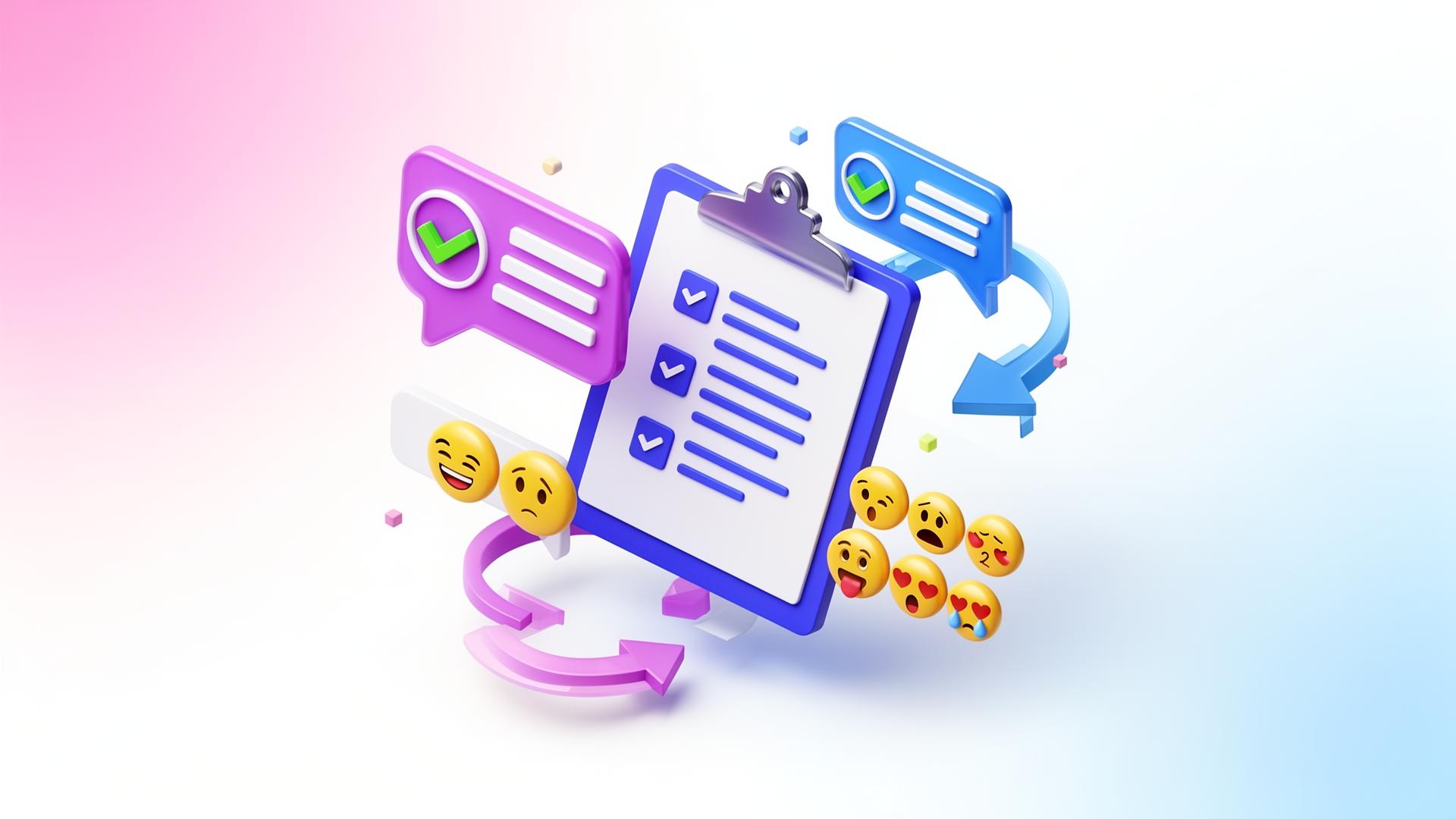
Traditional online surveys suffer from declining response rates and shallow answers. use AI to conduct natural conversations,delivering up to 3× richer insights.
Why Traditional Surveys Are Hitting Their Limits
The average completion rate for online surveys has dropped from 33% to below 20% over the past five years. The reasons are well known: too long, too boring, too irrelevant. But the real problem runs deeper,traditional questionnaires only capture what respondents can squeeze into predefined answer options.
change this fundamentally: AI-powered systems conduct natural, adaptive conversations that adjust in real-time to responses,generating insights no multiple-choice questionnaire could ever deliver.
The Problem with Traditional Surveys
| Dimension | Traditional Survey | Conversational Survey |
|---|---|---|
| Format | Static questions, fixed order | Dynamic conversation, adaptive paths |
| Response Rate | 15-25% | 40-65% |
| Answer Depth | Predefined options | Open, natural language answers |
| Duration | 10-15 min (feels long) | 5-8 min (feels short) |
| Analysis | Quantitative | Quantitative + Qualitative |
| Scalability | High | High (via AI analysis) |
How Conversational Surveys Work
The Architecture
consist of three core components:
1. Conversation Engine
- NLP-based dialogue management with contextual adaptation
- Adaptive question logic: follow-up questions based on previous answers
- Real-time for tone adjustment
- Multi-turn dialogues for deeper probing
2. Insight Extraction Layer
- Automatic topic extraction from open-ended answers
- Entity recognition for brands, products, features
- Emotion analysis beyond pure sentiment scores
- Automatic coding of qualitative responses
3. & Reporting
- Real-time dashboards with aggregated insights
- Automatic clustering of similar responses
- Comparative analyses between segments
- Export to common research formats
Adaptive Conversation in Practice
An example of adaptive question logic:
Traditional:
> Question 7: "How satisfied are you with our customer service? (1-5)"
Conversational:
> AI: "You just mentioned that support was helpful with your last inquiry. Can you tell me more about what exactly worked well?"
>
> User: "The response came quickly and the agent immediately understood what I needed."
>
> AI: "That sounds like a positive experience. Have there been situations in the past where it didn't go as smoothly?"
This type of conversation generates context-rich, nuanced data that goes far beyond a number on a scale.
Use Cases for Conversational Surveys
1. Customer Experience Research
- Post-purchase interviews for journey optimization
- Churn analysis through empathetic exit conversations
- NPS follow-ups with qualitative depth
2. Product Feedback
- Feature discovery through explorative dialogues
- Usability insights from natural descriptions
- Beta testing feedback with adaptive depth
3. Brand & Market Research
- Brand perception studies with emotional depth
- Concept testing through dialogic exploration
- Competitive analysis from customer perspective
4. Employee Experience
- Onboarding feedback with personalized follow-ups
- surveys that feel like real conversations
- Exit interviews with AI-powered analysis
Quality Assurance: Valid Data from Conversations
must meet the same scientific standards as traditional methods:
Validation Framework
| Criterion | Method | Benchmark |
|---|---|---|
| Reliability | Test-retest with AI consistency checking | Cohen's κ > 0.75 |
| Validity | Triangulation with quantitative data | Correlation r > 0.8 |
| Representativeness | Demographic quota control | Deviation < 5% |
| Bias Control | Prompt rotation and neutrality checks | < 3% framing effect |
| Data Quality | Automatic detection of low-effort responses | > 90% usable |
Ethical Considerations
- Transparency: Respondents must know they're interacting with AI
- Privacy: GDPR-compliant processing of all conversation data
- Informed Consent: Clear disclosure about data usage
- Bias : Regular checks for systematic biases
Technology Stack for Conversational Surveys
Implementation requires specialized tools:
- Conversation Layer: LLM-based dialogue systems (GPT-4, Claude, Gemini)
- Survey Logic: Adaptive question routing with branch logic
- NLP Pipeline: Topic extraction, sentiment, entity recognition
- : Real-time dashboards and automated reports
- Integration: CRM, CDP, and research platform connections
Implementation Roadmap
Phase 1: Pilot (Weeks 1-4)
- Define use case (e.g., post-purchase feedback)
- Conversation design for 5-7 core questions
- Train AI model and
- Small sample (n=100) for validation
Phase 2: Optimization (Weeks 5-8)
- Optimize conversation flows based on pilot data
- Analysis pipeline for automatic insight extraction
- A/B test: conversational vs. traditional questionnaire
- Establish quality metrics
Phase 3: Scaling (Weeks 9-16)
- Roll out multi-language support
- Integrate into existing research workflows
- Automated reporting templates
- Training for research teams
ROI of Conversational Surveys
| Metric | Traditional Survey | Conversational Survey | Improvement |
|---|---|---|---|
| Response Rate | 20% | 55% | +175% |
| Insights per Respondent | 5-8 data points | 15-25 data points | +200% |
| Time-to-Insight | 4-6 weeks | 1-2 weeks | -65% |
| Analysis Effort | 40+ hours | 8-12 hours | -75% |
| Respondent Satisfaction | 3.2/5 | 4.4/5 | +38% |
Conclusion: Conversations Instead of Questionnaires
aren't simply better surveys,they represent a paradigm shift in market research. Instead of forcing people into rigid answer formats, AI-powered dialogues embrace the natural complexity of human opinions and experiences.
For marketing teams, this means: richer insights, faster results, and a significantly better respondent experience,while achieving higher data quality.
Want to deploy for your market research? Davies Meyer supports you in designing, implementing, and analyzing AI-powered survey systems.
Loading related terms…
All TermsReady for your next project?
Let's discuss your marketing challenges and develop solutions together.
Get in touchKeep reading
Related posts
 AIAugust 30, 20269 min
Grok Bot Skills: How to Truly Scale AI in Your Marketing
Reusable task instructions help teams organise AI work consistently. Learn how to connect briefs, data, quality checks and version control, and measure the benefits in your own workflow.
Read article AIAugust 30, 20269 min
AI with Brand DNA: Why Generic Bots Are a Brand Risk
Off-the-shelf AI assistants can dilute your brand. Learn how strategic calibration, guardrails, and red-teaming can transform a generic bot into a powerful, on-brand ambassador that positively impacts business outcomes.
Read article AIAugust 30, 20269 min
Prompt Ops: The Operating System for AI in Marketing
The uncontrolled use of AI prompts leads to chaos. Prompt Ops provides a structured approach to manage prompts like software, ensuring efficiency, quality, and scalability in marketing.
Read article
Bekomme solche Insights jede Woche.
Strategische Marketing-Insights für CMOs — kein Fluff, kein Spam.