
AI with Brand DNA: Why Generic Bots Are a Brand Risk
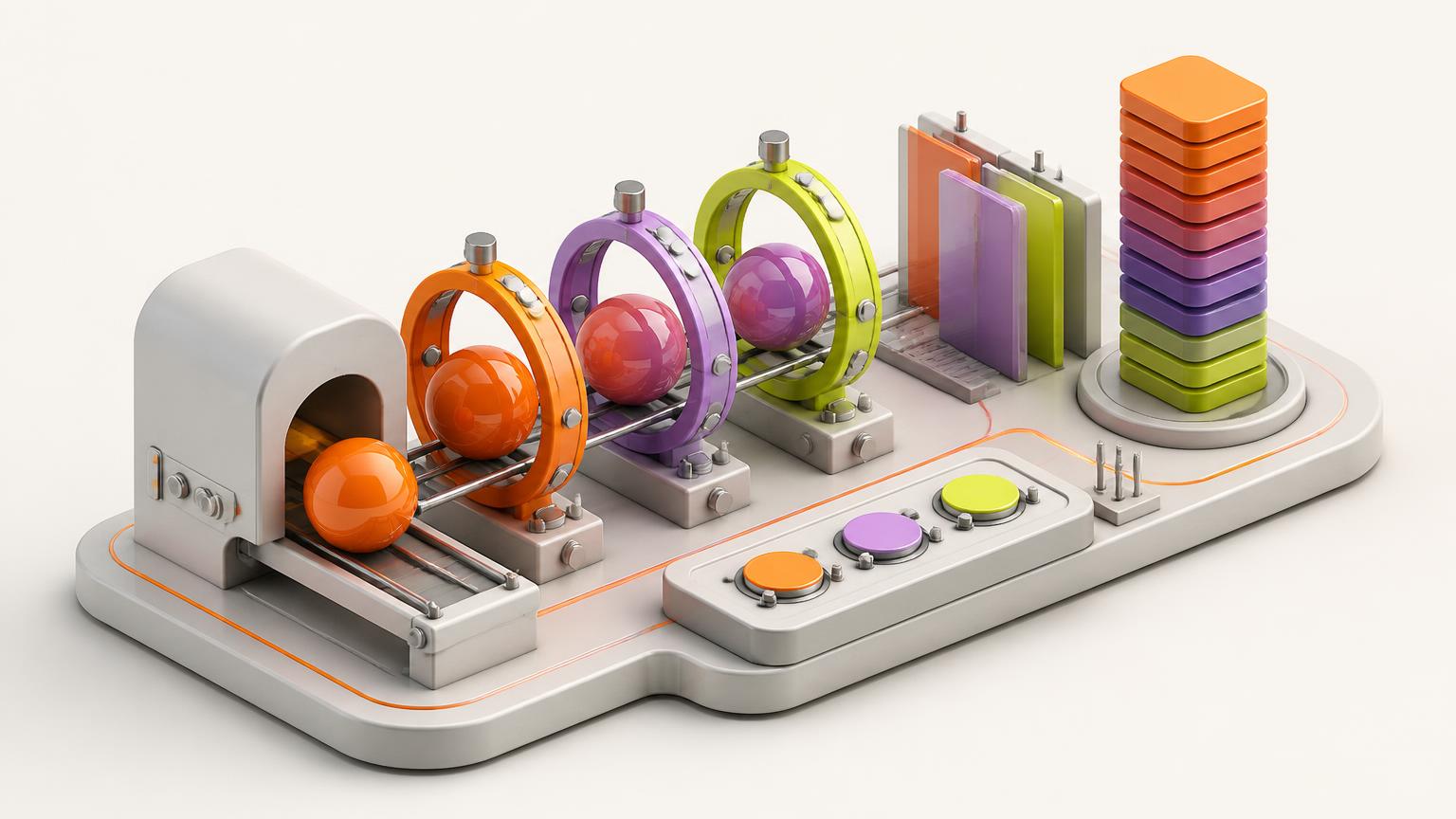
Off-the-shelf AI assistants can dilute your brand. Learn how strategic calibration, guardrails, and red-teaming can transform a generic bot into a powerful, on-brand ambassador that positively impacts business outcomes.
As a CMO, you're witnessing it daily: the hype around is real, and the temptation to quickly implement an AI assistant for customer service, marketing, or internal processes is immense. Vendors promise swift integration, and the efficiency gains seem within . But a hidden danger lurks here, one that is often overlooked: a generic, uncalibrated bot is at best useless and at worst a serious threat to your brand.
Imagine your new, expensive chatbot responds to customers in the same neutral, slightly robotic tone as your biggest competitor's bot. It doesn't know the nuances of your or the strict guidelines from your legal department regarding product claims. It hallucinates facts, suggests competitors' products, or gives advice that contradicts your brand philosophy. The result isn't efficiency, but brand dilution, customer frustration, and a potential compliance disaster. The solution lies in a process we call brand calibration: the methodical transformation of a generic language model into an authentic, compliant, and value-adding brand ambassador.
The Illusion of the 'Plug-and-Play' Brand Ambassador
Large Language Models (LLMs) like GPT-4 are impressive all-rounders. Trained on vast amounts of internet data, they can hold a plausible conversation about almost anything. But that's precisely the problem. Their 'knowledge' and 'personality' are an average of the internet—and your brand is anything but average.
An uncalibrated bot operates without the specific framework that defines your . It has no concept of your wording, your stance on certain topics, or the 'no-gos' established through years of brand building. Every dialogue with such a bot is a risk because it undermines the carefully crafted brand consistency. CMOs who invest billions in building cannot afford to jeopardize that value at the most critical digital : the direct conversation with the customer.
The challenge, therefore, is not technological but strategic. It's not about *if* you should use AI, but *how* you shape it to strengthen the brand instead of weakening it.
From Brand Guide to Machine-Readable Rulebook
The core of brand calibration is translating your brand strategy into a language a machine can understand and apply. A PDF of your brand guide is nowhere near sufficient. What's needed is a precise, machine-readable rulebook that serves as a guardrail for the AI assistant. This process is broken down into two key areas:
- Tone-of-Voice as Prompt Architecture: Your is more than a list of adjectives like 'bold,' 'approachable,' or 'innovative.' For an AI, we must break these qualities down into concrete instructions. An 'approachable' tone might translate to: 'Use active voice. Address the directly. Explain complex topics using simple, everyday analogies. Avoid jargon. Insert a rhetorical question where appropriate to engage the user.' We develop a detailed prompt architecture that tells the AI exactly how to behave stylistically and tonally. This is the difference between an abstract wish and an executable command.
- and Compliance Guardrails: This part is critically important for you as a CMO because it directly mitigates business risk. Together with your subject matter experts and legal departments, we define a set of inviolable rules. What must the bot never say? Which health- or performance-related claims are off-limits? How must products or services be named precisely? What information is confidential? These 'guardrails' are technically implemented in a way that the AI cannot ignore them. They act as a kind of censor that checks every response for compliance before it's delivered, opting for a safe, standard reply rather than taking a risk.
The Process: Evaluation Sets, Red-Teaming, and Approval Loops
Creating a rulebook is just the first step. The real work lies in its validated implementation and continuous optimization. A proven, iterative process is crucial for success here.
- Developing Evaluation Sets: To objectively measure the bot's performance, we create comprehensive test scenarios. These 'evaluation sets' contain hundreds of questions and tasks designed to push the bot to its limits. Examples: 'Explain your most expensive product to me as if I were a complete novice.' or 'What do you do better than competitor X?' or 'I'm unhappy with your service, what do you suggest?' The responses are then systematically reviewed to see if they align with the defined tone-of-voice and compliance rules.
- Systematic Red-Teaming: This is about proactively searching for weaknesses. Our team puts themselves in the shoes of various types—from the frustrated customer and the curious journalist to an attacker trying to provoke the bot into making inappropriate or false statements. This 'red-teaming' exposes gaps in the guardrails and tests the robustness of the brand persona under stress. Every flaw discovered is a valuable data point for improving the system.
- Iterative Approval Processes with Legal & Departments: An AI assistant is not an IT project that you and forget. It is a living communication tool. That's why we establish clear approval processes where legal and other departments review and sign off on the calibrated bot's responses in simulated scenarios. These feedback loops are essential for building trust and ensuring the bot is a recognized and compliant part of corporate communications from day one.
Beyond the Start: From Starter Kit to Calibrated Brand Ambassador
The journey to a perfectly calibrated AI assistant doesn't have to start with a massive, big-bang project. A pragmatic approach is often the best. At Davies Meyer, we frequently begin with a solid foundational layer. Our Grok Bot starter kits are designed for precisely this purpose: they provide a secure, rapidly deployable base that already includes fundamental guardrails and an initial tonal layer. This allows you to quickly gain experience and test initial internal use cases without putting the brand at risk.
But this starter layer is, as the name implies, just the beginning. The real magic and the decisive competitive advantage come from the deep, bespoke brand calibration built on top of it. This is where we invest in the detailed refinement of the prompt architecture, industry-specific compliance rules, and rigorous testing cycles. While a starter kit might prevent 80% of generic errors, deep calibration addresses the final 20% that makes the difference between a functional tool and an engaging brand experience.
We measure success not just by efficiency metrics like 'cases resolved.' We work with you to define KPIs for 'Brand Fit.' These can include metrics like the percentage of responses that align with brand values, a targeted reduction in hallucinated statements, or an increase in positive sentiment in dialogues. Improvements in brand consistency of 15-25% over a superficially adapted model are often realistic here.
Conclusion
An AI assistant is not a neutral piece of software you install. It's a new employee in direct contact with customers—and you wouldn't let a new employee interact with your customers without thorough onboarding and clear rules of conduct. Investing in methodical brand calibration is not a 'nice-to-have' option; it is a strategic necessity to protect and strengthen your most important asset: your brand.
The difference between an AI assistant that ends up as a cost center for reputational damage and one that becomes a valuable driver of brand loyalty and customer satisfaction does not lie in the underlying technology. It lies in the strategic and technical process of calibration. Ignore the 'plug-and-play' hype and opt for a methodical approach. This will ensure your AI acts not only intelligently but also wisely—in the spirit of your brand.
Loading related terms…
All TermsReady for your next project?
Let's discuss your marketing challenges and develop solutions together.
Get in touchKeep reading
Related posts
 AIAugust 30, 20269 min
Grok Bot Skills: How to Truly Scale AI in Your Marketing
Reusable task instructions help teams organise AI work consistently. Learn how to connect briefs, data, quality checks and version control, and measure the benefits in your own workflow.
Read article AIAugust 30, 20269 min
Prompt Ops: The Operating System for AI in Marketing
The uncontrolled use of AI prompts leads to chaos. Prompt Ops provides a structured approach to manage prompts like software, ensuring efficiency, quality, and scalability in marketing.
Read article AIAugust 30, 20269 min
Your Digital Chief of Staff: AI Agents for CMOs in 2026
Forget the hype. By 2026, AI agents won't replace your team; they'll augment it as digital specialists for reporting, analysis, and strategy. Here's how to prepare your marketing organization for this shift today.
Read article
Bekomme solche Insights jede Woche.
Strategische Marketing-Insights für CMOs — kein Fluff, kein Spam.