
Intent Data & Signal-Based Selling: Identifying Purchase-Ready Accounts Before They Reach Out
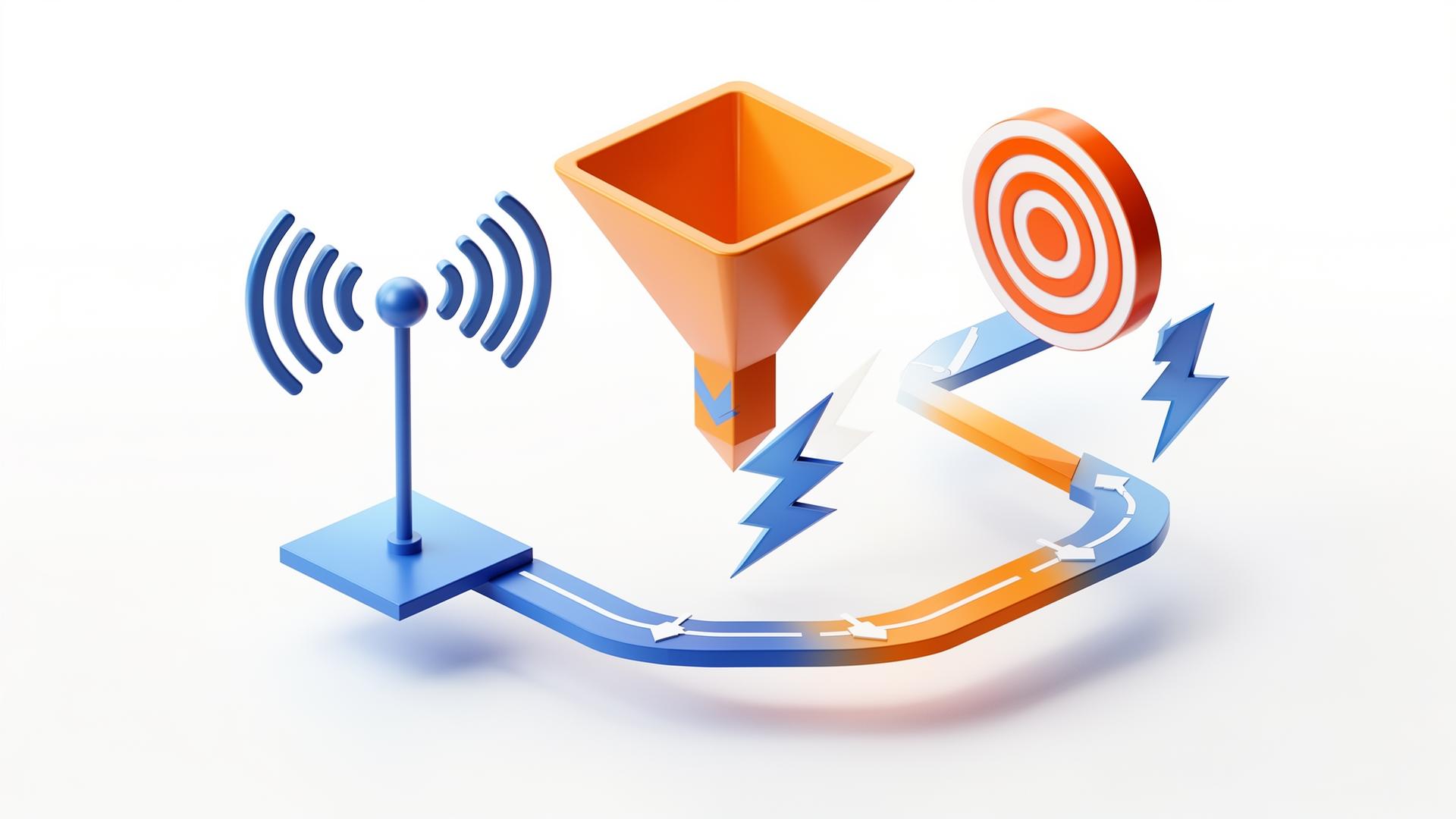
are revolutionizing B2B sales and marketing. Learn how to leverage digital buying signals to the right accounts at the right time, and why Signal-Based Selling is replacing cold outreach.
Intent Data & Signal-Based Selling: The End of Cold Outreach
Imagine knowing exactly which companies are actively searching for your solution, before they contact you. No guesswork, no cold emails into the void, no spray-and-pray. That's exactly what enables: digital signals that reveal when an account is ready to buy.
In 2026, is no longer a futuristic concept but the foundation for a new sales philosophy: Signal-Based Selling. The approach where timing and relevance replace traditional cold outreach.
What Is Intent Data?
are digital behavioral signals indicating active purchase or research intent. They emerge when companies or their employees research online, consume , or evaluate products.
The Three Types of Intent Data
| Type | Source | Example | Quality |
|---|---|---|---|
| First-Party | Own channels | Website visits, downloads, demo requests | Highest relevance but limited volume |
| Second-Party | Partner platforms | Review sites (G2, Capterra), industry portals | High quality, specific context |
| Third-Party | Aggregated sources | Research behavior across publisher networks, trade media | Largest volume but validation needed |
The magic lies in combination: When an account visits your pricing page (First-Party), simultaneously reads competitor reviews (Second-Party), and increasingly consumes content about your product category (Third-Party), that's not coincidence, it's a clear buying signal.
Signal-Based Selling: The New Sales Philosophy
Signal-Based Selling is the strategic approach of steering sales activities based on intent signals rather than static lists or cold outreach.
The Paradigm Shift
Traditional Sales:
- Static target customer lists from CRM
- Cold outreach based on company size and industry
- Time-based follow-ups (every 14 days)
- Success rate: 1–3%
Signal-Based Selling:
- Dynamic account prioritization by buying signals
- Contextual outreach based on researched topics
- Event-triggered activities (Surge Detection)
- Success rate: 5–15%
The critical difference: You're no longer reaching out to companies that *might* fit your , but those *actively* searching for a solution right now.
How Intent Data Works in Practice
1. Surge Detection, The Early Warning System
Surge Detection identifies when an account significantly exceeds its normal research behavior. Example: A company that normally reads 2 articles per month about "CRM systems" suddenly consumes 15 posts in a week. This pattern, the Intent Surge, signals active evaluation.
2. Topic Cluster Monitoring
Rather than tracking individual keywords, thematic clusters are monitored. A B2B SaaS provider might monitor these clusters:
- Evaluation phase: "CRM comparison," "Salesforce alternative," "CRM migration"
- Pain phase: "Sales pipeline problems," " management inefficient"
- Solution phase: "CRM implementation," "CRM ROI calculator"
Based on cluster activity, the system recognizes which buying phase the account is in.
3. Competitive Intent, When Accounts Evaluate Competitors
Particularly valuable: shows when target accounts actively consume competitor . When an account increasingly reads comparison articles between your product and competitors, it's a window for contextual outreach with differentiating messages.
Intent Data + Firmographics = Predictive Scoring
's true power unfolds in combination with firmographic data. A Predictive Score emerges from weighting:
- Firmographics (Fit): Industry, company size, tech stack, region
- (Interest): Website visits, email interactions, event attendance
- Intent (Purchase Intent): Third-party research behavior, consumption, surge signals
- Timing (Urgency): Speed of intent increase, seasonal patterns
The Scoring Algorithm in Practice
| Signal | Weight | Example |
|---|---|---|
| Pricing page visited | High | +25 points |
| Competitor review read | High | +20 points |
| Blog article read | Medium | +5 points |
| Intent Surge (3x normal) | Very high | +30 points |
| Matching company size | Baseline | +15 points |
| 2nd demo requested | Critical | +40 points |
Accounts with a combined score above a defined threshold are automatically prioritized for the sales team, with full context on detected signals.
GDPR-Compliant Intent Data Management
In Europe, privacy-compliant use of is essential. Three approaches ensure GDPR compliance:
1. Firmographics Over Personal Data
Use at account level (company names, industry, behavior patterns) rather than individual level (email, name). Firmographic data faces less stringent regulations.
2. Data Clean Rooms
Secure environments where first-party data is merged with third-party intent signals without exchanging personally identifiable information.
3. Consent-Based Enrichment
Where personal data is involved, explicit consent is obtained, ideally through transparent preference centers.
Implementing Signal-Based Selling: A 90-Day Plan
Phase 1: Foundation (Weeks 1–4)
- Define your Ideal Customer Profile (ICP) with firmographic criteria
- Identify 5–10 relevant intent topic clusters
- Implement first-party intent tracking (website, )
- Ensure CRM data quality is sufficient
Phase 2: Integration (Weeks 5–8)
- Integrate third-party into your CRM/ system
- Develop scoring models with fit + intent + engagement
- Train the sales team on contextual outreach
- Set up automatic alerts for intent surges
Phase 3: Optimization (Weeks 9–12)
- Analyze conversion rates by intent score segments
- Refine scoring weights based on closed deals
- Scale to additional intent topics and target audiences
- Implement closed-loop reporting (Intent → Pipeline → Revenue)
Measurable Impact: Intent Data in Numbers
Companies that strategically deploy consistently report:
- 3–5x higher rates for intent-prioritized accounts vs. cold outreach
- 40–60% shorter sales cycles because accounts are engaged during evaluation
- 20–30% larger deal sizes as contextual outreach supports premium positioning
- 50% less wasted sales time through focused account prioritization
Conclusion: From Lead Chasing to Signal Intelligence
and Signal-Based Selling mark a fundamental shift in B2B sales. It's no longer about knocking on as many doors as possible, but finding the right doors that are already open.
The key lies in orchestration: provides the "when" and "what," firmographics the "who," and your sales team the "how." Those who intelligently connect these three layers transform their sales from reactive cold outreach to proactive, data-driven Signal-Based Selling.
The future of B2B sales isn't louder, it's more precise.
Loading related terms…
All TermsReady for your next project?
Let's discuss your marketing challenges and develop solutions together.
Get in touchKeep reading
Related posts
 Data & AnalyticsOctober 17, 202614 min
Google AI search reports: Measuring visibility without inventing leads
New AI reports can inform content priorities. They do not replace complete click attribution or business-outcome measurement.
Read article Data & AnalyticsJuly 24, 20269 min
The MMM Renaissance and Incrementality: Defending Budgets Without Last Click
Signal loss has finally devalued last-click attribution. Marketing mix modeling and incrementality testing are becoming the new standard — if combined correctly. A practical build-out.
Read article Data & AnalyticsJanuary 15, 202612 min
Behavioral Data Fusion: How Merging Behavioral Data Is Revolutionizing Marketing
Behavioral Data Fusion connects data streams from web analytics, CRM, social media, and IoT into a holistic customer view. Learn why isolated data silos are marketing's biggest blind spot.
Read article
Bekomme solche Insights jede Woche.
Strategische Marketing-Insights für CMOs — kein Fluff, kein Spam.