
Research Agents: How AI Is Automating Market Research
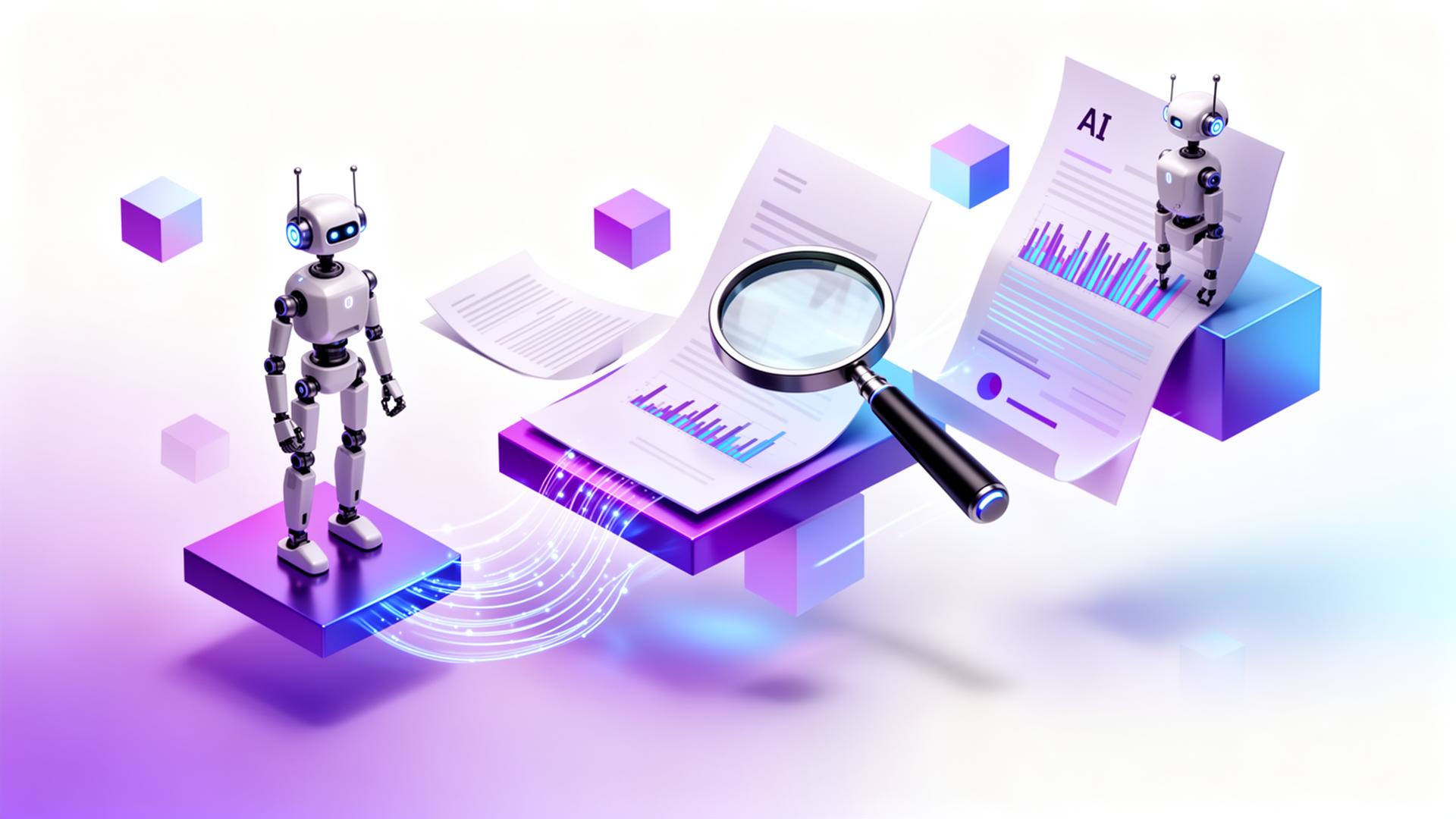
are revolutionizing market research: AI systems that autonomously plan, conduct, and analyze studies. Learn why 84% of researchers believe agents will soon manage half of all projects.
Research Agents: The Next Evolution of Market Research
Market research is facing its biggest disruption since digitalization. Not because of new methods, but because AI systems are beginning to orchestrate the entire research process autonomously. Welcome to the age of .
According to Qualtrics (2026), 95% of researchers already use AI tools. But the real tipping point is happening now: 84% of researchers who use AI for believe will manage more than half of all research projects end-to-end within three years.
What Are Research Agents?
are AI-powered systems that autonomously plan, conduct, and analyze market research projects. Unlike simple AI assistants that help with individual tasks (e.g., text summarization), Research Agents act autonomously across the entire research cycle.
The Difference: AI Assistant vs. Research Agent
| Dimension | AI Assistant | Research Agent |
|---|---|---|
| Role | Helps with individual tasks | Orchestrates entire workflow |
| Autonomy | Waits for instructions | Acts proactively |
| Scope | One task (e.g., analysis) | End-to-end (Design → Collection → Analysis → Report) |
| Interaction | Prompt-based | Goal-oriented |
| Learning | Static per session | Contextual long-term learning |
| Quality | Manual by researcher | Built-in quality gates |
A Research Agent could autonomously execute this chain: Define research question → Select methodology → Create questionnaire → Recruit sample → Collect data → Perform statistical analysis → Extract insights → Generate recommendations → Create stakeholder report.
The Four Application Areas of Research Agents
1. Self-Service Insights for Non-Researchers
The biggest promise of : They multiply a research team's impact without increasing its workload.
Before: A Product Manager wants to know how customers evaluate a new feature. They file a research ticket, wait 2–4 weeks for capacity, and receive results after another 3 weeks.
With Research Agent: The PM asks the agent: "How do customers under 30 in Germany rate our new checkout feature?" The agent designs a brief questionnaire, pulls participants from a panel, analyzes results, and delivers a data-backed answer with confidence intervals in 48 hours.
2. Autonomous Competitive Analysis
can continuously monitor competitive landscapes:
- Track social media sentiment about competitors
- Detect and analyze pricing changes
- Document product launches and feature updates
- Create weekly briefings with strategic implications
3. Real-Time Qualitative Analysis
One of the most transformative use cases: analyze qualitative data (open-text responses, interview transcripts, social media comments) in a fraction of the time human coders need, at comparable quality.
An agent can:
- Thematically cluster 10,000 open survey responses in minutes
- Detect sentiment and emotions at sentence level
- Identify emergent themes not anticipated in the coding framework
- Automatically assign quotes to the right themes
4. Conversational Research
Research Agents enable an entirely new form of data querying: Stakeholders ask natural language questions and receive data-backed answers.
Examples:
- CEO: "How has customer satisfaction in DACH developed last quarter?"
- CMO: "What three topics concern our B2B customers most?"
- Head of Product: "How does Feature X compare to the competition?"
The agent searches existing studies, combines data sources, and delivers contextualized answers, including source citations and confidence assessments.
The Transformation of the Research Role
change not just methods but the entire professional identity of market researchers.
From Gatekeeper to Enabler
Traditional role: Researcher as who controls access to insights, commissions studies, and presents results.
New role: Researcher as enabler who:
- Defines quality frameworks for agent-assisted research
- Sets methodological guardrails (sample sizes, significance levels)
- Handles complex, strategic questions that agents can't solve
- Validates and calibrates AI models
- Trains the organization in data literacy
The Leadership-Team Gap
Qualtrics reveals a concerning discrepancy: 72% of C-suite leaders believe their organization relies more on research than a year ago, but only 44% of individual contributors agree. 83% of leaders say AI tools have made their teams more efficient, but only 65% of researchers share that view.
This gap must be closed. Teams that feel overwhelmed rather than empowered by AI won't deliver the innovation their leadership expects.
Specialized vs. Generic AI in Research
A critical 2026 trend: The market is moving away from general-purpose AI toward specialized research platforms.
The Numbers
- 2024: 75% used general-purpose AI (ChatGPT & Co.), 2026: only 67%
- 2024: 62% used AI embedded in research platforms, 2026: already 66%
Why Specialized AI Wins
| Aspect | General-Purpose AI | Specialized Research AI |
|---|---|---|
| Data quality | Hallucination risk | Validated against real data |
| Methodology | No sampling theory | Built-in statistical standards |
| Integration | Copy-paste workflow | Seamless in research platform |
| Governance | No audit trails | Full traceability |
| Privacy | Data flows to third parties | Data stays in controlled environment |
Fine-tuned models specifically trained on survey data significantly outperform general LLMs on research tasks, particularly in interpreting scale responses, detecting response patterns, and generating methodologically sound insights.
Implementation Roadmap for Research Agents
Phase 1: Quick Wins (Month 1–2)
- Automated transcription & summarization: Automatically transcribe and thematically summarize interviews and focus groups
- Open-response analysis: AI-powered coding of open text responses in existing surveys
- generation: Automatic creation of results dashboards from quantitative data
Phase 2: Assisted Research (Month 3–6)
- AI-assisted questionnaire design: Agent suggests questions, researcher validates
- Semi-autonomous analysis: Agent performs initial analysis, researcher interprets and contextualizes
- Conversational reporting: Stakeholders can query results in chat format
Phase 3: Autonomous Research (Month 6–12)
- Self-service insight portal: Non-researchers can independently conduct simple studies
- Continuous : Agents continuously monitor customer satisfaction, market trends, and competitors
- Predictive research: Agents proactively identify topics that should be investigated
Phase 4: Research Intelligence (Month 12+)
- Cross-study synthesis: Agent connects findings across studies and time periods
- Adaptive research designs: Agent adjusts methodology in real time based on incoming data
- Organizational learning: Agent builds institutional knowledge and makes it searchable
Quality Assurance: The Human Role
are powerful but not infallible. Three areas continue to require human expertise:
1. Methodological Integrity
AI can execute statistical tests, but choosing the right method requires experience. Is a conjoint analysis the right approach, or will a MaxDiff suffice? Does it need a representative sample or will a convenience sample do? These decisions remain with the researcher.
2. Contextual Interpretation
An agent can detect that satisfaction has dropped 5 points. But understanding why, whether it's a product issue, a competitor , or a seasonal fluctuation, requires market knowledge and experience.
3. Ethical Assessment
Research with humans requires ethical sensitivity: Are the questions appropriate? Are vulnerable groups protected? Are the conclusions fair? These evaluations cannot be delegated to AI.
The Business Case for Research Agents
Quantitative Benefits
- 60–80% faster results delivery for routine studies
- 40–50% cost reduction through automation of repetitive tasks
- 3–5x more studies with the same team size
- 24/7 availability for data-driven decisions
Strategic Benefits
- Research team can focus on complex, strategic questions
- Insights become part of daily operations rather than isolated reports
- Faster feedback loops between research and product development
- Democratization of insights strengthens data-driven culture
Conclusion: The Future of Market Research Is Agent-Powered
don't replace researchers, they transform their role. The best research teams in 2026 won't be those with the most people, but those who orchestrate most intelligently.
The shift from to enabler, from manual analysis to AI-orchestrated insight engine, from reactive commissioned research to proactive intelligence, that's the path market research is taking right now.
The question isn't whether Research Agents are coming. They're here. The question is whether your team uses them, or gets overtaken by them.
Loading related terms…
All TermsReady for your next project?
Let's discuss your marketing challenges and develop solutions together.
Get in touchKeep reading
Related posts
 AIAugust 30, 20269 min
Grok Bot Skills: How to Truly Scale AI in Your Marketing
Reusable task instructions help teams organise AI work consistently. Learn how to connect briefs, data, quality checks and version control, and measure the benefits in your own workflow.
Read article AIAugust 30, 20269 min
AI with Brand DNA: Why Generic Bots Are a Brand Risk
Off-the-shelf AI assistants can dilute your brand. Learn how strategic calibration, guardrails, and red-teaming can transform a generic bot into a powerful, on-brand ambassador that positively impacts business outcomes.
Read article AIAugust 30, 20269 min
Prompt Ops: The Operating System for AI in Marketing
The uncontrolled use of AI prompts leads to chaos. Prompt Ops provides a structured approach to manage prompts like software, ensuring efficiency, quality, and scalability in marketing.
Read article
Bekomme solche Insights jede Woche.
Strategische Marketing-Insights für CMOs — kein Fluff, kein Spam.