
Social Search: Why Gen Z Stopped Googling
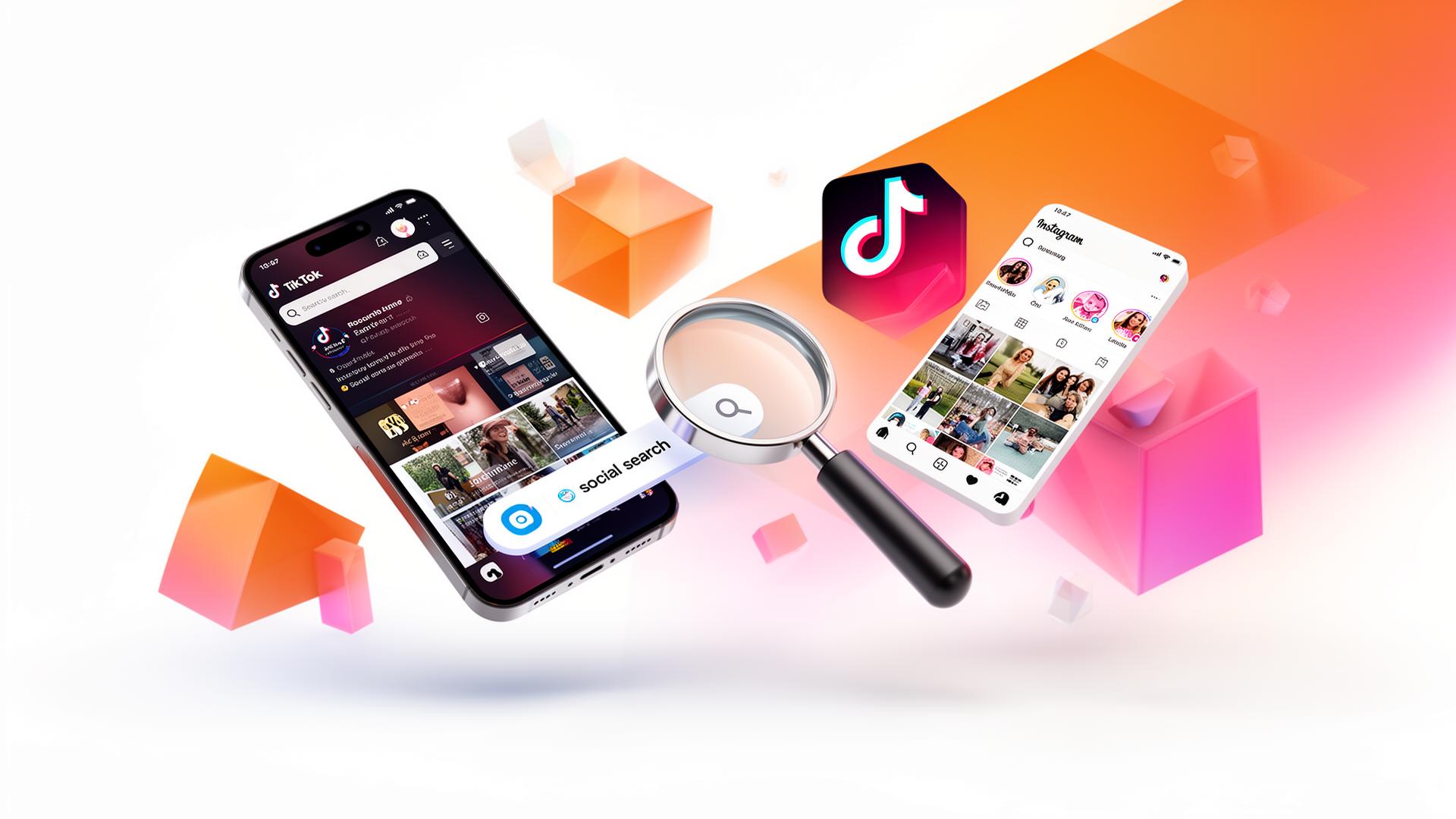
TikTok and Instagram are replacing Google as a search engine – how brands need to adapt their strategy to stay visible in .
The Search Engine Is No Longer Google
Nearly 40% of Gen Z use TikTok or Instagram when searching for restaurants, products, or travel tips – instead of Google. This figure doesn't come from a niche study, but from Google itself.
isn't a trend. It's a paradigm shift.
What does this mean? Users increasingly search where they already spend their time: on social media platforms. And the platforms are responding – with ever-better search functions, keyword recognition, and algorithmic delivery.
Why Social Search Works
1. Visual Answers Instead of Blue Links
When someone searches for "best café Hamburg," they don't want an SEO-optimized listicle. They want a 30-second video with an authentic recommendation. TikTok delivers exactly that.
2. Community Trust Beats Authority
Reviews on Google are often anonymous. On TikTok or Instagram, you see real people with real experiences. This builds trust – especially among younger audiences.
3. The Algorithm as Curator
Social platforms don't just show results – they curate. The For-You feed on TikTok is essentially a personalized search engine that answers questions before you ask them.
What This Means for Brands
Content Must Be Searchable
- Keywords in captions and subtitles are mandatory
- Hashtags function as a category system
- Alt text and descriptions are read by platform algorithms
Formats Must Be Answer-Ready
must answer a question. "5 tips for…", "How to…", "Why you should…" – these formats dominate .
Local SEO Goes Social
For local businesses, becomes a survival question. Those who can no longer be found on Google Maps need to be visible on TikTok and Instagram.
Platform Comparison
| Platform | Strength | Search Behavior |
|---|---|---|
| TikTok | Video-first, Discovery | Products, Travel, Food |
| Visual, Lifestyle | Fashion, Beauty, Locations | |
| YouTube | Long-form, Tutorial | How-To, Reviews, Education |
| Inspiration, Planning | DIY, Recipes, Interior |
Our Recommendation
1. Audit your social : Is it searchable? Does it contain relevant keywords?
2. Rethink formats: Create that answers questions
3. Think platform-specific: Each platform has its own search logic
4. Set up monitoring: Track which terms are associated with your brand
Conclusion
doesn't just change how people search. It changes what they expect from . Brands that understand this and optimize their content accordingly gain a massive competitive advantage.
The question is no longer whether your googles. It's where they search.
Loading related terms…
All TermsReady for your next project?
Let's discuss your marketing challenges and develop solutions together.
Get in touchKeep reading
Related posts
 Social MediaOctober 17, 202613 min
TikTok Search Ads: Turning search intent into demand
Keyword-based advertising in TikTok search: how it differs from TTAN and how to plan a test you can evaluate.
Read article Social MediaOctober 8, 20267 min
TikTok Ad Network (TTAN): What brands need to know now
Pangle becomes TikTok Ad Network: TikTok campaigns now run in third-party apps too. What this means for reach, brand safety and budget planning.
Read article Social MediaSeptember 17, 20268 min
Meta One for businesses: From a Reel to the next step
New links, more AI and additional tools: how brands can use Meta One to connect content, websites and customer conversations, and what to check before starting.
Read article
Bekomme solche Insights jede Woche.
Strategische Marketing-Insights für CMOs — kein Fluff, kein Spam.